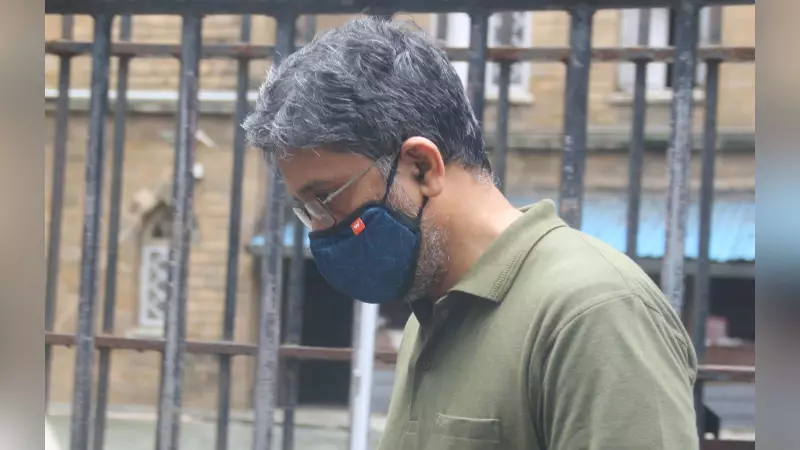
After spending five years as an undertrial, Hany Babu M T, an accused in the Elgaar Parishad case, has finally stepped out of prison, granted bail by the Bombay High Court. The 58-year-old former Delhi University professor, who was arrested in July 2020, now resides in a rented home in Kharghar, Navi Mumbai, not far from the Taloja Central Jail where he was lodged.
The Long Wait for Trial and Bail
The Bombay High Court granted bail to Hany Babu on December 4, 2025, citing his long incarceration without the commencement of a trial. Babu was among the 16 individuals arrested in the case, with only three remaining in custody now. He was an Associate Professor in the English Department at Delhi University at the time of his arrest and was subsequently suspended from service.
The National Investigation Agency (NIA) had accused him of being part of a conspiracy to further the activities of the banned CPI (Maoist). Specifically, he was charged with involvement in a defence committee formed to secure the release of another Delhi University professor, G N Saibaba. Saibaba was acquitted of similar charges in March 2024 and passed away later that year in October.

Solitude, Sickness, and the Struggle for Healthcare
Babu describes his initial days in prison as particularly grueling. He was placed in solitary confinement for nearly a month as part of COVID-19 quarantine protocols, unable to leave his cell or interact with anyone. "I was constantly worried if my family members knew where I was," he recalls, adding that he only found reassurance after speaking to his lawyers in the third week.
His health suffered severely during his imprisonment. In May 2021, he developed a critical eye infection, orbital cellulitis, which severely affected his vision. He alleges he was denied timely medical access until his wife, Jenny Rowena—also an assistant professor at Delhi University—intervened by writing to the authorities. "I keep telling her that, if not for you, I would have died in jail," Babu states, noting that he nearly lost sight in one eye and continues to experience pain.
He criticizes the prison system's approach to inmate health, saying complaints are often trivialized. Babu also contracted COVID-19 during his time inside. Despite the challenges, he found a semblance of normalcy when moved to a regular barrack, even though it was severely overcrowded, holding three times its intended capacity of 22 inmates.
Resistance Through Resilience and Family Ties
For Babu, survival became a conscious act of defiance. "When you are confined, they want to break you. The best way to resist is to not succumb," he asserts. He emphasizes that maintaining physical health and mental activity was his primary mode of fighting back.
Staying connected with his family was a lifeline, though fraught with difficulties. His wife and daughter would travel from Delhi to visit every few months. They also relied on letters, but the slow postal system within the jail created a disorienting communication lag. "The letters and their response would get all jumbled up due to this. It felt like living in multiple time zones," Babu remembers. Video and phone calls helped him stay in touch with his mother in Kerala.
To keep his mind engaged, Babu taught English to fellow inmates, read extensively, and learned Tamil, Urdu, and some Arabic. An agnostic, he even turned to reading the Quran and offering namaz for personal strength. He also worked on writing about linguistics in Malayalam, a field he says is underexplored.
Life After Bail and an Uncertain Future
As a condition of his bail, Babu cannot leave Mumbai without the court's permission, a common restriction for most accused in the Elgaar Parishad case who are not Mumbai residents. A petition by co-accused Gautam Navlakha to reside in Delhi during the trial is pending before the High Court.
Babu, who holds a law degree, spent much of his prison time helping other inmates draft legal applications. "Five years inside has given me a good education in law," he remarks, expressing a desire to pursue this legally oriented work.

His immediate hope is to return to Delhi and challenge his suspension from the university. "Only once I go back can I start the struggle of getting my job back," he says, looking toward a future where he can rebuild the academic life he often dreamt about during his long years behind bars.