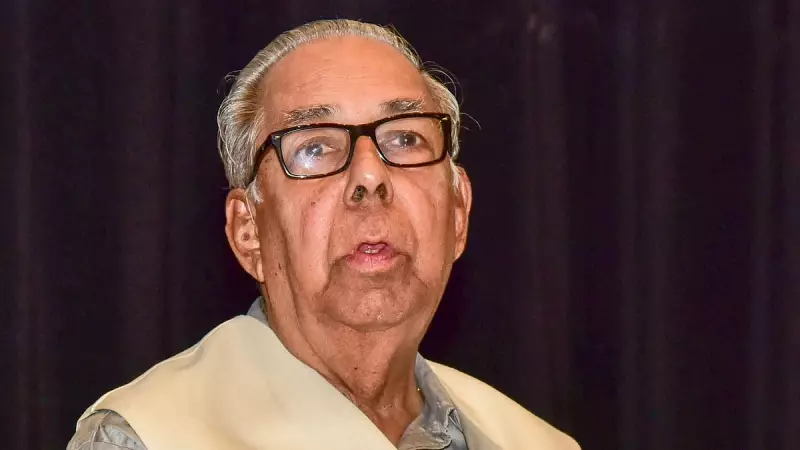
In a strong critique of proposed new legislation, former Advocate-General of Karnataka, B V Acharya, has labelled the so-called Hate Speech Bill as both "draconian" and "unnecessary." The senior advocate issued this sharp condemnation while addressing a public seminar focused on the bill's implications for fundamental freedoms.
Seminar Highlights Free Speech Concerns
The event, titled ‘Hate Speech Bill and Civil Liberties’, was organised by the group Citizens for Democracy. Held recently, the seminar provided a platform for legal experts and civil society to dissect the potential overreach of the proposed law. B V Acharya, a respected legal authority, served as the key speaker, articulating deep-seated apprehensions about the bill's framework.
Acharya argued that existing laws within the Indian Penal Code (IPC) are sufficiently equipped to handle instances of hate speech and incitement to violence. He expressed concern that introducing a new, standalone legislation would create redundancy and, more alarmingly, open doors for its misuse. The veteran lawyer emphasised that such a law could potentially stifle legitimate dissent, healthy debate, and free expression—cornerstones of a vibrant democracy.

Why The Bill is Seen as a Threat
Central to Acharya's criticism is the fear of arbitrary application. He pointed out that the term "hate speech" itself can be subjective and vaguely defined. Without crystal-clear legal definitions and stringent safeguards, the law could be weaponised to target political opponents, activists, and ordinary citizens based on ambiguous interpretations. This, he warned, would have a chilling effect on public discourse.
The seminar took place on 10 January 2026, marking a significant moment in the ongoing public consultation around the contentious bill. The participation of a figure of Acharya's stature lends considerable weight to the arguments against the proposed legislation. His stance underscores a growing debate between the stated aim of maintaining social harmony and the imperative to protect constitutional liberties.
Broader Implications for Civil Rights
The critique extends beyond legal technicalities to the very health of civil society. Acharya's comments, made under the banner of Citizens for Democracy, reflect a broader unease among civil liberty groups. They worry that well-intentioned laws can sometimes morph into tools for control, eroding the democratic space.
As the discussion around the Hate Speech Bill continues, the forceful objections raised by legal luminaries like B V Acharya are likely to fuel further scrutiny. The event highlights the critical need for a balanced legislative approach that addresses genuine social malice without compromising the fundamental right to freedom of speech and expression guaranteed by the Indian Constitution.