The father of a 4-year-old girl who died after allegedly being sexually assaulted earlier this year told TOI on Wednesday she might have been alive had hospitals not turned away from their basic duty to save lives.
The Ghaziabad resident, whose petition was heard by the Supreme Court on June 16, said his faith in the system was shattered when two hospitals — Khajan Singh Manvi Health Care and St Joseph’s — where he took his daughter declined to treat her despite seeing the injured, bleeding child in his arms. They did not yield even to his appeal that time was critical to save the child.
“She was alive for two hours after we found her,” he said, adding that both hospitals refused to even examine her. The girl was eventually taken to a government hospital, but she succumbed on the way.

The Supreme Court asked the hospitals if they would compensate the parents, but the girl’s father said there is something that goes far beyond compensation that needs fixing — accountability.
The child was playing outside their home in Nandgram on March 16 when a neighbour, Gaurav, approached her around 6 pm. He took her to a nearby market and bought her samosas, jalebis and lollipops before leading her away from the house. On the walk back, he took her to a secluded, overgrown patch about 500 metres away, where he allegedly raped her and then struck her on the head with a brick. She lay there in a daze for hours before her family found her.
The father, a house painter, was at work when his elder son called to say his sister could not be found. “I told him she must be somewhere nearby,” he recalled. By the time he reached home at 7:15 pm, she was still missing and panic had set in. He got photographs of the girl enlarged at a cyber cafe so they could be shown around. Neighbours joined the search. Search parties split up and combed the Nandgram area for nearly two hours.
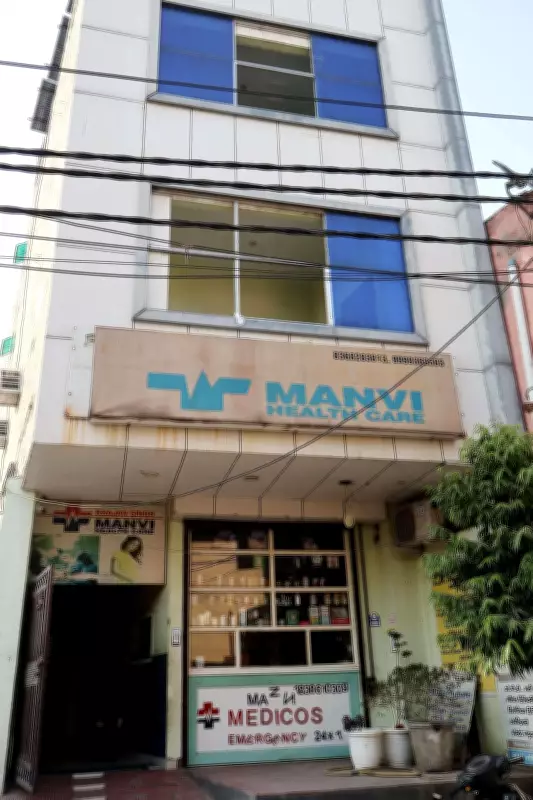
At 9 pm, the father found her. Her clothes had been removed and she was bleeding heavily. “I lifted her onto a motorcycle, holding her in my lap while a friend rode and others ran ahead to clear traffic,” he said. Their first stop, roughly 15 minutes away, was Khajan Singh Manvi Health Care. There, he said, doctors told him they lacked the facilities to treat her and that he should go to a bigger hospital.
“I pleaded with folded hands,” he said. “But the hospital did not even arrange an ambulance.”
The next stop was St Joseph Hospital, around 15 to 20 minutes further. Here, he said, doctors told him it was a medico-legal case and that they could not treat her, directing him instead to a government facility. He said he begged before the staff, but they refused to examine her.
By the time he reached MMG Hospital, the nearest government facility, an hour had passed. There, doctors pronounced her dead. “If the two hospitals had treated her, my daughter might have survived,” he said. “If my daughter is no longer alive today, the hospitals are also responsible for it.”
An autopsy later found 11 injury marks on the child’s body, including three head injuries, signs of strangulation, bite marks and injuries to the genital area.
A Supreme Court-appointed special investigation team examined the father’s allegations and found substance in his claim that the two private hospitals had declined to provide prompt treatment to the critically injured child.
On Tuesday, the apex court bench asked counsel for one of the hospitals how much it would voluntarily pay the parents of the deceased girl. “If you admit negligence and voluntarily compensate the parents, it is fine. Otherwise, we will determine the compensation payable by the hospitals to the parents,” it said.
Shara Ashraf Prayag, a child rights activist who helped the father file his petition before the Supreme Court and accompanied the SIT on its visits to both hospitals, said Khajan Singh Manvi Health Care should have administered basic first aid before referring the child elsewhere. She was more critical of St Joseph Hospital, which she described as a well-regarded, well-equipped charitable institution.
“The doctors there refused to treat the child,” she said, adding that the hospital later gave media statements claiming the father himself had declined treatment, an account she disputed.

She pointed out that a police post stood directly outside the hospital, meaning officers could have been summoned in minutes had the medico-legal angle been the genuine obstacle. “The child died simply because she did not receive treatment in time,” she said.
Lalit Goyal, a spokesperson for St Joseph Hospital, gave TOI a different account of what transpired. He said the child was brought in by her attendants and remained in the emergency department for under five minutes, during which staff began assessment procedures and informed doctors, who were on their way to the unit. “However, before the examination could be conducted and treatment commenced, the attendants expressed concerns regarding the availability of adequate facilities and decided of their own accord to transfer the child to another healthcare facility,” he said.
Goyal added that hospital staff had noted how critical her condition was and said the absence of an ambulance or medical supervision during the subsequent transfer may have worsened her condition.
Officials at Khajan Singh Manvi Health Care did not respond to TOI’s calls seeking comment.
In its order, the Supreme Court bench was also critical of police’s role. It noted that the girl’s parents’ trauma was aggravated when the local police, instead of taking cognisance of the “horrifying offence”, locked them up and physically assaulted them with an admonition to remain silent about the incident.
Nandgram ACP Ziauddin Ahmad said an FIR on charges of murder was lodged based on a complaint submitted by the girl’s father. Later, charges under the SC/ST Act were added because the girl is from a dalit family. The accused was arrested after an encounter.
On April 3, police filed a 900-page chargesheet in the district court under BNS sections 103 (murder), 238 (causing disappearance of evidence or providing false information to shield offenders) and 66, along with sections 5 and 6 of the Pocso Act and relevant provisions of the SC/ST Act.
The father, meanwhile, told TOI that he alerted police that the spot where his daughter was found bore signs of drug use, with syringes and empty bottles scattered nearby, and that the area was known to be frequented by drug users. He alleged the accused had taken drugs through a syringe shortly before the assault, but said no action was taken despite his repeated complaints about the site.
Stay updated with the latest Noida news. Download the TOI App.