

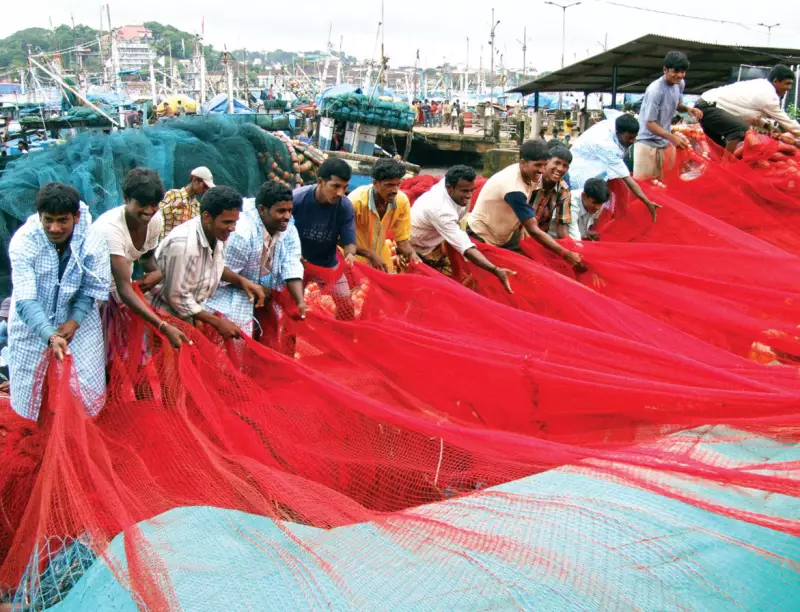
In a significant ruling, a North Goa court has discharged 24 traditional fishermen, including activist Olencio Simoes, from a rioting case that originated from a protest over eight years ago. The court found a critical lack of direct evidence linking the accused to the alleged crimes.
Court Cites Flawed Prosecution, Grants Discharge
The Judicial Magistrate First Class (JMFC) F court in Panaji, presided over by Judge Ankita Navgenkar, issued the discharge order for the case dating back to May 12, 2016. The court explicitly stated that the prosecution failed to provide concrete proof of the fishermen's culpability. "...it appears that prima facie, there is no direct evidence to allege culpability upon the accused and to conclude that they committed the alleged offence and hence the accused are entitled for benefit of doubt and deserve to be discharged," the court order stated.
Protest Against Destructive Fishing Practices
The legal case stemmed from a protest where members of Goa's fishing community had gathered near the directorate of fisheries in Panaji. They were demonstrating against the use of LED lights and bull trawling, methods they and environmentalists consider highly destructive and unnatural for Goa's marine ecology. The prosecution had alleged that the assembled group formed an unlawful assembly, violated orders from the district magistrate, and engaged in violent conduct against police personnel.

Critical Observations on Police Investigation
The court's order highlighted major inconsistencies in the investigation. It pointed out that the chargesheet revealed a crucial flaw: every witness's supplementary statement was recorded almost 2 to 3 days after the incident. The court deemed this delay indicated the statements were "recorded as an afterthought" specifically to implicate the accused.
Furthermore, the court noted that almost all witnesses were police personnel. It also observed that the accused were not arrested at the scene for the alleged assault or abuse. The order questioned the basis of the charges, stating, "It is not the case of the prosecution that these persons only were the ones who obstructed the police... In fact, the complaint reveals that the police, using force, were successful in dispersing the agitators."
The court made a clear distinction, holding that "Merely questioning the police cannot invoke the sections levelled against the accused." This observation underscored the court's view that the charges were disproportionate to the actual events described in the complaint.
A Long-Awaited Relief for the Fishing Community
The discharge brings a protracted legal battle to an end for the 24 individuals, offering them relief from a case that has lingered since 2016. The ruling also casts a spotlight on the tensions between traditional fishing communities and modern, intensive fishing practices in Goa. The court's critique of the investigation process underscores the importance of timely and impartial evidence collection in maintaining judicial integrity.






