

Major Police Operation in Golaghat Targets Illegal Liquor Trade
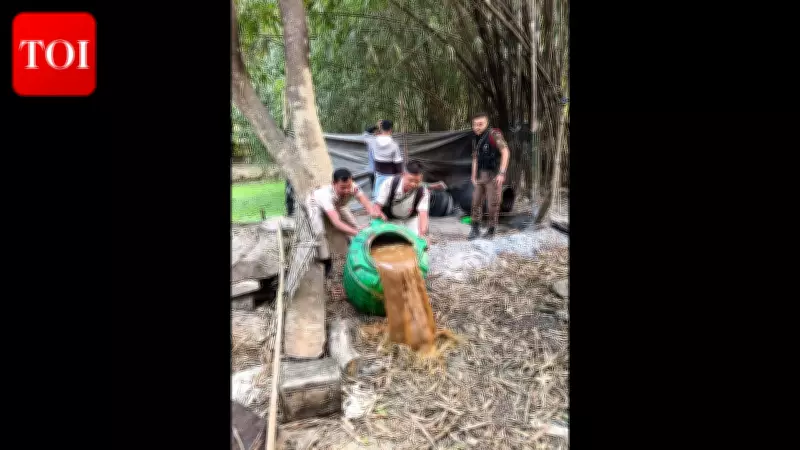
In a significant enforcement action, police in Golaghat district, Assam, launched a district-wide crackdown on the illegal liquor trade on Tuesday. The operation resulted in the dismantling of more than two dozen illicit country liquor dens and the seizure of over 3,000 litres of "sulai," a locally brewed rectified spirit that is widely consumed in rural areas and tea garden communities.
Simultaneous Raids Across Multiple Locations
The crackdown targeted multiple locations to disrupt the supply chain of illegal alcohol. Police teams from four police stations and outposts conducted simultaneous raids across their jurisdictions. In addition to the liquor, authorities confiscated brewing equipment and hundreds of kilograms of "lali gur" (molasses), which is used in the fermentation process. Several suspected bootleggers were detained during the operation, and legal action is being initiated against them.
Details of the Seizures and Destruction
Golaghat Senior Superintendent of Police Rajen Singh provided specific details on the seizures. Kamarbandha Police Outpost seized and destroyed 1,000 litres of illicit liquor. Barpathar Police Station recovered and destroyed 900 litres from Jorhotia and Borchapori villages. Chumonigaon Police Outpost seized and destroyed 600 litres, while Merapani Police Station destroyed 500 litres. At each location, the brewing sites, locally known as "sulai bhattis," were dismantled to prevent further production.

Health Risks and Historical Context of 'Sulai'
"Sulai" is a colourless spirit traditionally distilled from molasses or rice. However, its unregulated production has been linked to fatal poisoning incidents. Police and public health officials have repeatedly warned that illegal brewers often adulterate the liquor with toxic chemicals to increase potency and profits. The low price of "sulai" keeps demand high among daily wage earners and tea garden labourers, exacerbating public health risks.
This crackdown comes amid lingering concerns following the 2019 Assam hooch tragedy, where at least 158 people—mostly tea garden workers in Golaghat and Jorhat—died after consuming contaminated "sulai." Forensic findings from that incident detected methanol, liquid jaggery, and crushed dry cell batteries in the brew, which triggered statewide outrage and led to intensified enforcement against illicit liquor networks.






