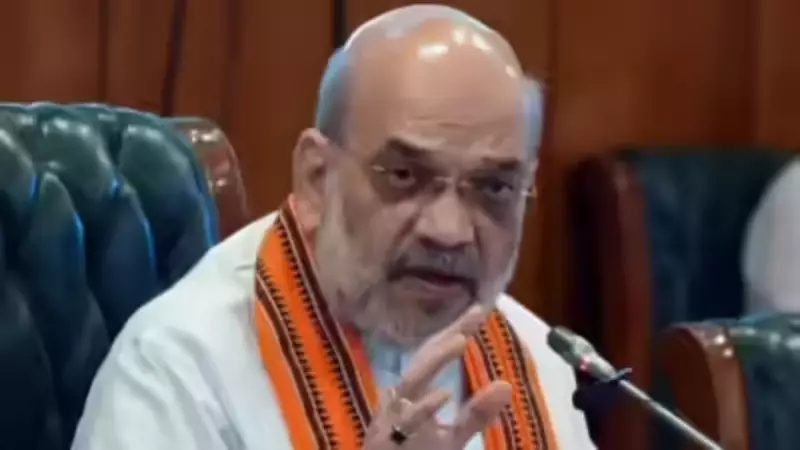
In a major policy escalation, the Indian government has declared an all-out, three-year war against narcotics, set to be launched on March 31. Chairing a high-level meeting in New Delhi, Union Home Minister Amit Shah reframed the nation's fight, labeling the drug menace a grave issue of "narco-terrorism" rather than just a law-and-order problem.
A Strategic Conspiracy Against India's Future
Amit Shah, while presiding over the Narco-Coordination Centre (NCORD) meeting at Vigyan Bhawan, described the drug trade as a strategic conspiracy aimed at "destroying the country's future generations." He directed all government departments to finalise a comprehensive "Drug-Free India" roadmap by 2029. The minister stated that as India targets 2047 for its centenary of independence, the upcoming three-year period is a critical window to cleanse the nation's social fabric and secure the health of its youth.
Highlighting the government's intensified efforts, Shah revealed a staggering statistic: drugs worth over Rs 1.71 lakh crore were seized between 2014 and 2025. This marks a massive surge from the Rs 40,000 crore worth of narcotics confiscated in the decade before 2014.

The Three-Pronged Tactical Offensive (2026-2029)
The core of the 2026-2029 campaign is a clear, three-pronged strategy:
- Ruthless Crackdown on Supply: A merciless offensive against traffickers and the dismantling of their financial networks.
- Strategic Demand Reduction: A focused push for awareness to reduce the demand for drugs.
- Humane Harm Reduction: A medical-first, compassionate approach towards users who are seen as victims.
"There should be no leniency for those who manufacture and sell drugs, but a humane approach must be adopted toward those who have fallen into usage," Shah said, drawing a clear policy line between perpetrators and victims.
Leveraging Tech: AI, Forensics, and Darknet Tracking
To sustain momentum and boost conviction rates, the Home Ministry has mandated the use of Artificial Intelligence (AI) and advanced forensics. Shah directed state police chiefs to operate in "mission mode," creating permanent, specialised teams for intelligence and coordination.
A significant part of the discussions addressed modern challenges like darknet-based drug commerce and cryptocurrency payments. The minister emphasised that the anonymity of these platforms requires sophisticated tech interventions, including darknet analysis tools and machine learning models to trace anonymous transactions and secure borders against cyber-enabled trafficking.
The meeting also focused on a "360-degree investigation" model to cripple the financial backbone of narco-terror networks. This approach integrates traditional policing with forensic financial audits to target hawala operations and freeze assets linked to the drug trade.
By deepening the integration of Forensic Science Laboratories into investigations, the government aims to ensure timely chargesheets and significantly higher conviction rates, making the war on drugs not just a crackdown but a sustained, intelligence-driven national mission.