

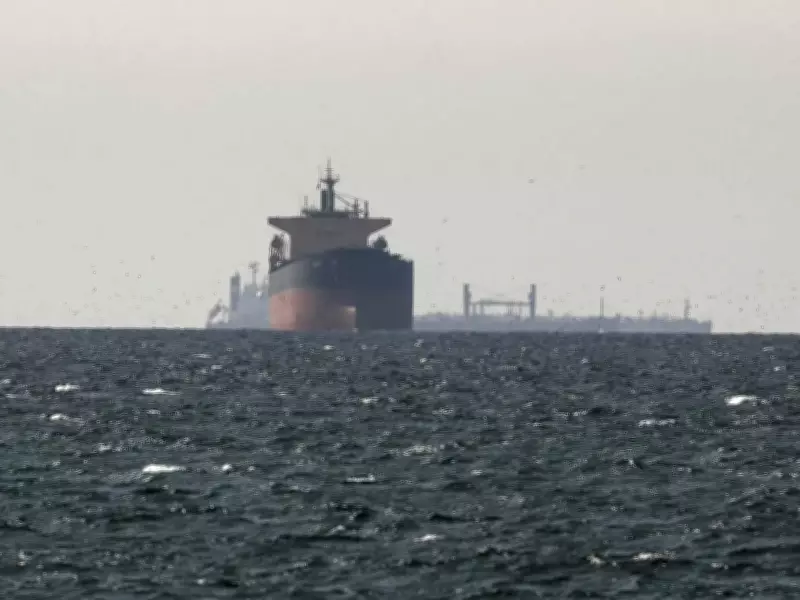
Indian Seafarers Navigate Perilous Waters Amid GPS Jamming and Mine Threats in Strait of Hormuz
Indian seafarers operating in the strategically vital Strait of Hormuz are currently facing a trifecta of severe challenges: widespread GPS disruptions, alarming warnings about underwater mines, and a lack of clear navigation authority. This volatile situation is forcing ships to rely heavily on manual navigation techniques, significantly increasing the risk of accidents in one of the world's most congested maritime corridors.
Radio Broadcasts and Iranian Warnings Create Confusion
Ships transiting the region are reporting repeated radio broadcasts over official maritime channels, explicitly warning vessels against passage. "Attention all ships… This is the Sepah Navy… navigation through Strait of Hormuz is forbidden… no ship is allowed to pass until further notice," the messages declare. Crew members have identified the source of these announcements as Iran's Islamic Revolutionary Guard Corps (IRGC) Navy. These real-time, authoritative instructions are directly influencing captains' decisions, creating an atmosphere of confusion and heightened alert.
GPS Failures Force Dangerous Manual Navigation
The disruption to Global Positioning System (GPS) signals is particularly critical. Modern commercial shipping depends almost entirely on satellite-based systems for precise route plotting, collision avoidance, and positional awareness. In the narrow, treacherous waters of the Strait of Hormuz, a loss of accurate positioning can be catastrophic.

Captain Manish Kumar, an Indian master mariner with 28 years of experience, currently commands a chemical tanker awaiting safe passage. He described the severe operational impact to The Times of India: "Navigation is severely affected due to GPS. It is very difficult to determine the position of the vessel... If you miss the position in such narrow waters, the vessel can be grounded or collide." To mitigate this, vessels are being provided with physical maps marking specific, designated transit corridors with arrows indicating entry and exit routes.
Unprecedented Combination of Threats
Captain Kumar emphasized that the current crisis is without precedent. "This combination — GPS issues, unclear timeline, and real threats out there — this is new," he stated. The 'real threats' include persistent warnings about naval mines—explosive devices that can be detonated by contact or proximity—posing a silent, deadly hazard beneath the waves.
The risks are exponentially amplified by the nature of the cargo. The Strait of Hormuz is a primary chokepoint for global energy supplies, meaning a majority of transiting vessels are oil or chemical tankers carrying highly flammable materials. An incident involving such a ship could trigger a massive explosion and environmental disaster.
Security Advisories Flag "Critical" Threat Level
In response to the escalating dangers, shipping companies have begun issuing daily "conflict intelligence briefs" directly to vessels. These documents synthesize military advisories, open-source intelligence, and proprietary risk assessments into actionable, real-time guidance for crews.
A security update from March 25 urged "extreme caution," specifically noting GPS interference, elevated port security levels, and unconfirmed concerns regarding mine-laying activities. Furthermore, a March 24 advisory from the US-led Joint Maritime Information Center officially raised the regional maritime threat level to "critical." This assessment cited 21 confirmed incidents since March 1 and ongoing "navigation interference" across the Strait of Hormuz, Gulf of Oman, and Arabian Gulf.
Drastic Drop in Maritime Traffic
The cumulative effect of these threats has led to a dramatic reduction in shipping traffic. Daily vessel transits through the strait have plummeted from an average of approximately 138 to single digits, underscoring the severe operational and safety constraints now defining this crucial global waterway. Indian seafarers and the international maritime community remain on high alert as the situation continues to evolve.






