The Gujarat High Court has delivered a significant ruling, stating that Waqf institutions are not exempt from paying court fees. This decision effectively ends a long-standing policy that had been a subject of political controversy.
Minister's Allegation of Vote Bank Politics
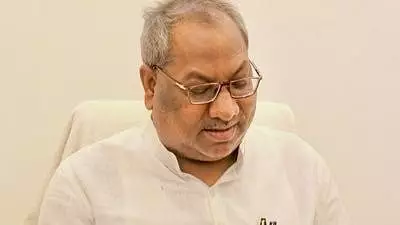
Speaking at a public function, Gujarat's Minister of State for Home, Harsh Sanghavi, provided the political context behind the court's decision. He alleged that the exemption for Waqf tribunals was a product of vote bank politics during the Congress rule.
Sanghavi claimed that while the Congress government had waived court fees for Waqf bodies, it continued to collect the same fees from tribunals of other religious communities. This included Hindu and Sikh religious institutions, creating what he described as an unequal and discriminatory legal landscape.

The Court's Landmark Decision
The High Court's ruling, announced on 17 December 2025, brings all religious institutions under a uniform framework regarding court fees. The judgment underscores the principle of equality before the law, ensuring no single religious body receives preferential treatment in judicial proceedings.
By removing the exemption, the court has mandated that cases filed in Waqf tribunals will now require the payment of standard court fees, just like any other civil or religious legal matter in the state of Gujarat.
Implications and Broader Impact
This decision is expected to have several immediate consequences:
- Financial Parity: It establishes financial parity in the judicial process across all religious institutions.
- Political Repercussions: It validates the current state government's criticism of previous policies and is likely to fuel further political debate on secularism and equitable governance.
- Operational Change: Waqf boards and tribunals in Gujarat will need to adjust their operational procedures to comply with the new mandate.
The ruling marks a pivotal moment in the discourse on religious institutions and state policy in India, reinforcing the judiciary's role in ensuring uniform application of rules.