

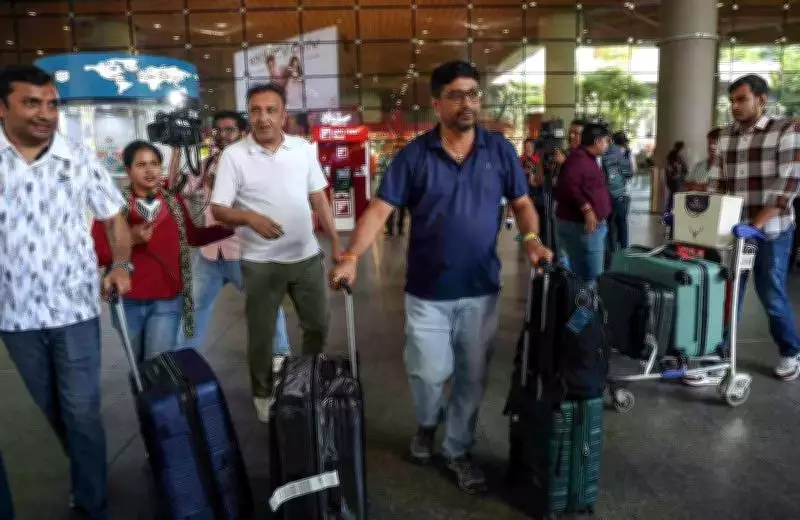
Gujarati Citizens Await Evacuation as Gulf Flight Chaos Continues
The escalating military confrontation between Iran, the United States, and Israel has entered its fourth consecutive day, creating severe travel disruptions that have left numerous Gujarati nationals stranded across key Gulf nations. Travelers transiting through or visiting Dubai, Abu Dhabi, Kuwait, and Qatar are facing extended delays and uncertainty regarding their safe return to India, as widespread airspace closures and flight cancellations persist.
Helplines Activated as Distress Calls Surge
In response to the growing crisis, local parliamentary representatives in Gujarat have established emergency assistance lines to support affected citizens and their anxious families. Anand MP Mitesh Patel, commonly known as Bakabhai, reported that his dedicated helpline, operational for just two days, has already fielded appeals from more than 300 stranded individuals seeking updates and logistical support.
"The government of India is making all efforts to ensure the safe return of our citizens. I am in continual touch with the authorities concerned and am monitoring the situation closely," Patel stated on Tuesday, emphasizing the coordinated response underway.

Limited Evacuation Flights Offer Little Relief
Although a restricted number of evacuation flights have resumed operations, and some Gulf-based airlines have cautiously restarted limited services from major hubs like Dubai and Abu Dhabi, overall passenger capacity remains drastically reduced. This bottleneck has resulted in prolonged waiting periods for hundreds of travelers, many of whom had embarked on brief family visits or business trips before regional tensions dramatically escalated.
Personal Stories Highlight Widespread Impact
Snehal Dhanwani, an Ahmedabad-based businessman stranded in Dubai, shared his predicament: "I run a consulting company and came to Dubai on February 23 for some business meetings. My return flight was scheduled for Saturday, February 28, but it got cancelled because airspace was shut. I returned to the hotel from the airport. The local government is very supportive and we are safe. I hope flights will start soon and I will be able to return to Ahmedabad soon."
Similarly, Vishal Chhawchharia from Gujarat expressed concern for his family members: "We have an IT company office in Dubai and my nephew handles it. My brother Vikash and sister-in-law Suman went to Dubai a week ago to meet their son. Their flight was cancelled. They are safe there and the government there has supported all visitors."
Regional Helplines Receive Hundreds of Appeals
The crisis has prompted similar initiatives in other districts. In Vadodara, a helpline managed by MP Hemang Joshi had registered 113 separate calls involving 278 stranded travelers by Monday evening alone. These communications highlight the scale of the disruption and the urgent need for clear information and repatriation pathways.
Atmosphere of Unease in Gulf Nations
On the ground in affected Gulf countries, travelers described an environment of uneasy calm prevailing on Tuesday. Many businesses have shifted to remote operations as a precaution, while educational institutions have transitioned entirely to online classes to ensure safety. With commercial aviation still operating at a fraction of its normal capacity, stranded passengers continue to vigilantly monitor airline announcements and official government updates, hoping for definitive clarity on their eventual return journeys to Gujarat and other parts of India.
The situation remains fluid, with authorities closely watching developments in the Iran-US-Israel conflict, which has directly caused these extensive travel interruptions. The priority for Indian officials remains the secure and timely evacuation of all citizens caught in the crossfire of geopolitical tensions and its logistical fallout.






