Unprecedented Gulf Attacks Trigger Panic Among Kerala's Diaspora
For the first time in the five-decade history of Gulf migration from Kerala, all six Gulf Cooperation Council (GCC) nations have come under simultaneous direct attack. This alarming development has sparked widespread panic and deep anxiety among the Keralite diaspora, whose livelihoods and the state's economic security are intricately tied to the region.
War Clouds Loom Over West Asia
While war clouds have been looming on West Asia's horizon, Keralites living in the Gulf did not anticipate retaliatory strikes until drones began hitting targets in the UAE, Bahrain, and Qatar on Saturday. The attacks have disrupted the sense of security that many long-term residents, like Abdul Samad, have cherished for years.
Samad, who has lived in the Gulf for over 35 years, had always viewed the UAE as providing a secure and quality life for his family. With his native Thirunavaya just a four-hour flight away, he enjoyed the best of both worlds. However, his planned return to the UAE on Sunday was cancelled due to the abrupt closure of UAE airspace, leaving him and thousands of others stranded.

"I've booked a flight to Muscat. UAE residents get an on-arrival visa in Oman. I will travel by road to Dubai," said Samad, highlighting the logistical nightmares faced by many.
Fear and Uncertainty Grip the Community
The attacks have shattered the perception of the UAE as one of the world's safest countries. Samad expressed the collective fear: "The fear is real. We can't predict where the missiles will land, so that fear is there." This sentiment is echoed across the large Malayali community, for whom this crisis is not just political but also logistical and emotional.
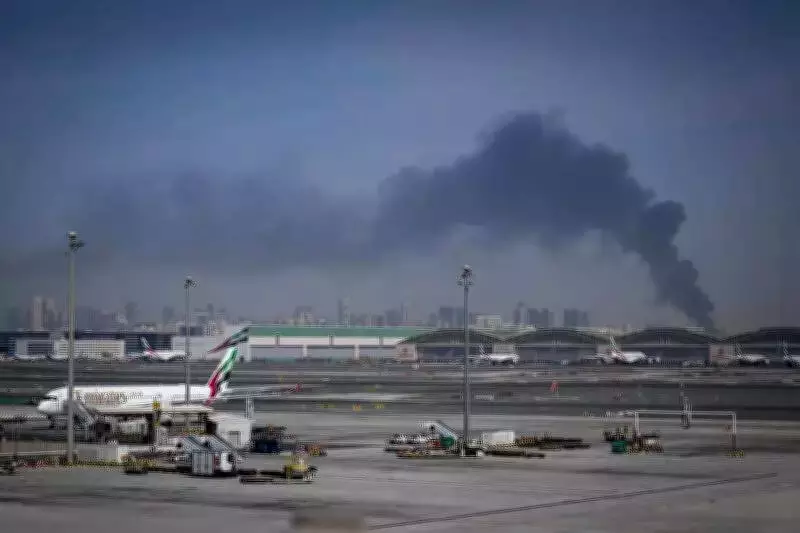
Keralites have migrated to 182 countries for work, but the Gulf remains their preferred destination, with the UAE, Saudi Arabia, and Qatar being the top three. According to Pravasi ID registration details from 2018 to 2022 with Norka, the diaspora's reliance on the region is profound. Interestingly, relatives back in Kerala are often more worried, as videos of smoke billowing over landmarks like Palm Jumeirah in Dubai circulate widely.
Scenes of Panic and Disruption
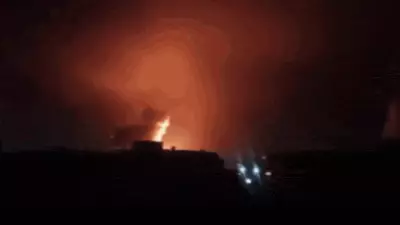
Residents across the Gulf have described scenes of panic following the attacks, with loud explosions, interceptor activity, and repeated alarms. Shaji Mathew in Abu Dhabi received a missile alert at 12:43 AM, instructing him to seek immediate shelter. "The alert came with a loud alarm noise on the phones of my family members as well. It was scary," he recalled.
Mathew noted that streets were largely empty, with Abu Dhabi Mall silent and public transport absent. Missiles targeted Al Dhafra Air Base, and debris from intercepted missiles reportedly landed in residential areas in Mussafah Shabiya.
Similar alerts were sent in other countries. In Kuwait, Naveen John confirmed alarms sounded on Sunday morning, disrupting Ramzan prayers. "Such special prayers are cancelled temporarily," he said.
Ground Reports from Various GCC Nations
- Dubai: Biju G, based in Dubai for 13 years, heard a loud explosion near Terminal-1, likely from falling shrapnel. He reported panic after alarms sounded, with aircraft grounded and schools switching to online classes.
- Bahrain: One of the most affected GCC countries, Bahrain is home to nearly 3 lakh Keralites. Pradeep Puravankara described the situation as unprecedented, with no one stepping outdoors and flights cancelled. Keralites near the naval base in Juffair were evacuated to makeshift shelters.
- Sharjah: Nizar noted that while there is no panic in Dubai, all are on alert. Transit passengers are stranded at Dubai airport, and CBSE exams face disruptions as classes move online.
Community Response and Relief Efforts
Bahrain Keraleeya Samajam, a prominent Keralite expatriate association established in 1947, has actively coordinated relief efforts. President P V Radhakrishnan Pillai stated that the situation appears to be stabilizing, with attacks being intercepted. "The experience during Covid taught us the importance of a strong community network. It continues to help us counter misinformation," he said.

Paul T Joseph of the All Kerala Colleges Alumni Forum added that there is no panic in Dubai compared to Qatar, but the airport cannot function due to fallen debris.
Travel Disruption and Economic Impact
The escalation has severely disrupted travel plans, particularly during Ramzan. Ahmed Mohammed Iqbal, a Dubai resident visiting Ottapalam, faces uncertainty over his return flight. Sejo Jose of IATO highlighted that foreigners are stuck in Thiruvananthapuram and Kochi, with flights to Europe via the Gulf cancelled. "This will impact our economy a great deal. All non-important travel is getting cancelled," he warned.
The Kerala government is continuously monitoring the situation, coordinating with the central government, Ministry of External Affairs, Indian missions, and expatriate organizations.
Contrasting Situation in Israel
Interestingly, nearly 10,000 Keralites working in Israel as caregivers are not unduly worried. Powlin Mathew, working in Israel for 10 years, said, "We are used to steps like going to bunkers whenever sirens are heard. We have developed confidence that we may not get affected by the war." Most missiles fired by Iran are being intercepted mid-air, providing a sense of security.
As the crisis unfolds, the Keralite diaspora remains on edge, grappling with fear, disruption, and an uncertain future in the Gulf.