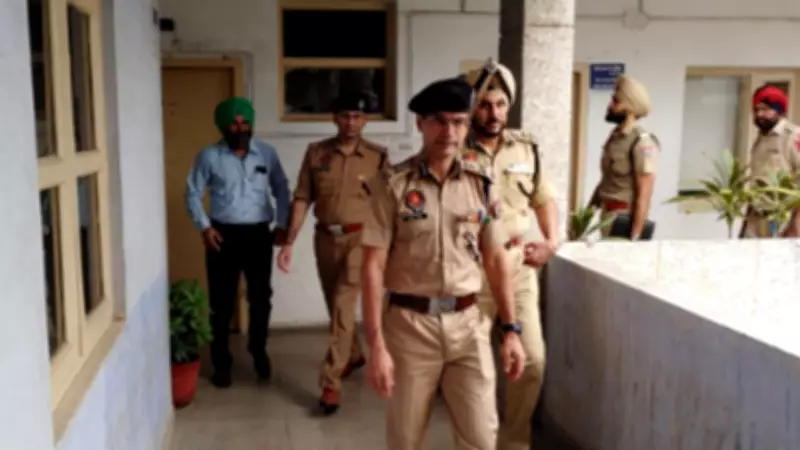
Haryana Police's Proactive Strategy Rescues Vulnerable Youth from Criminal Networks
The Haryana Police has achieved a significant breakthrough in combating organized crime through a visionary rehabilitation program. The state's Special Task Force (STF) has successfully identified and counseled 121 vulnerable youths who were found to be in contact with major criminal gangs, effectively preventing their recruitment into dangerous criminal networks.
Multi-Agency Approach to Crime Prevention
According to Director General of Police Ajay Singhal, this initiative represents a far-sighted policy that extends beyond traditional law enforcement to ensure broader social security. "One of the biggest challenges today is to guide youths at the crucial juncture where they can either become partners in nation-building or fall into the trap of crime," stated DGP Singhal during a detailed briefing about the program's success.
The comprehensive strategy involves multiple police units working in coordination. Apart from the STF, the Cyber Police and district-level police units are playing significant roles in similar preventive and corrective activities across the state.
Technical Surveillance and Family Involvement
The identification process relies on a sophisticated, multi-layered technology-based surveillance system that monitors social media platforms and digital communications. Investigations conducted through technical surveillance and field-level monitoring revealed how gangster networks deliberately target vulnerable youths through various manipulative tactics.
"Gangsters and their associates lured youths through greed and temptation," explained DGP Singhal. "Through social media and personal contacts, they were shown a false, glamorous world of crime where quick money, fear-based identity and power were projected as attractive."
In many cases, criminal elements exploited old rivalries, personal disputes, or emotional vulnerabilities of young individuals, deliberately provoking feelings of revenge to draw them into criminal activities.
Structured Counseling with Community Participation
A key innovation of this initiative has been the structured counseling process that prioritizes rehabilitation over punitive measures. All 121 identified youths participated in counseling sessions where they learned about the legal, social, and familial consequences of a criminal lifestyle.
Real-life examples of jailed gang members were shared during these sessions, highlighting the suffering of their families, economic hardship, and the breakdown of social structures caused by crime. The program emphasized how criminal networks attempt to instill the false belief that crime provides respect and power, while in reality, this path leads only to violence, legal action, and lifelong regret.
The counseling process featured significant community involvement, with family members and respected persons from society participating to ensure collective engagement in the reform process. This approach has proven particularly effective in creating sustainable behavioral change.
Ongoing Monitoring and Legal Measures
Even after completing the counseling program, the STF continues to keep all 121 youths under constant monitoring. Regular reviews have confirmed that due to timely and effective intervention, all participants have maintained distance from criminal activities, demonstrating the success of this preventive model.
Simultaneously, Haryana Police is taking swift legal action against illegal content on social media platforms that glorifies violence, gangster culture, and anti-social activities. This dual approach of rehabilitation and enforcement aims to create a comprehensive protective environment for vulnerable youth.
"The fight against gangster culture, violence and glorification of crime is a responsibility shared by police, families and society," emphasized DGP Singhal, highlighting the collaborative nature of this successful initiative.