Punjab and Haryana High Court Acquits Stepmother in 'Go and Die' Remark Case
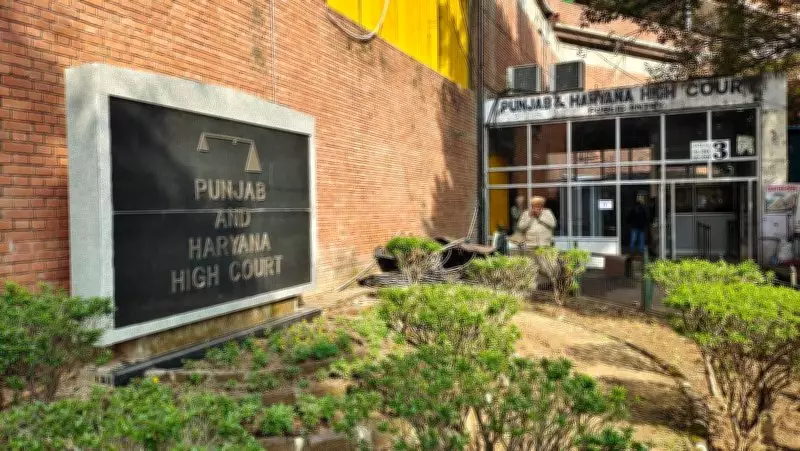
The Punjab and Haryana High Court has delivered a significant verdict, acquitting a stepmother who was accused of abetting the suicide of her stepson. The case centered on a "go and die" remark made by the stepmother, which the court ruled does not meet the legal threshold for abetment of suicide under Section 306 of the Indian Penal Code (IPC).
Court's Rationale on Abetment of Suicide
In its detailed judgment, the High Court emphasized that for a charge of abetment of suicide to stand, there must be clear evidence of direct incitement, instigation, or provocation leading to the act. The bench stated that mere harsh words or emotional outbursts, such as the "go and die" comment, are insufficient to constitute abetment unless they are proven to have actively encouraged the victim to take their own life.
The court referenced legal precedents, noting that abetment requires a conscious and intentional act by the accused to drive the victim toward suicide. In this instance, the stepmother's remark was deemed an expression of frustration rather than a deliberate provocation, and there was no evidence linking it directly to the stepson's decision to end his life.
Background of the Case
The case originated from Chandigarh, where the stepson died by suicide, and his stepmother was charged based on allegations that her "go and die" remark contributed to his death. The prosecution argued that the comment, made during a family dispute, amounted to abetment under Section 306 IPC, which prescribes punishment for abetment of suicide.
However, the High Court, after reviewing the evidence, found that the remark alone did not establish the necessary mens rea (guilty mind) or causal connection required for conviction. The judgment highlighted that suicide is a complex act often influenced by multiple factors, and attributing it solely to a single statement without corroborative proof is legally untenable.
Implications of the Verdict
This ruling has broader implications for similar cases involving alleged abetment of suicide through verbal remarks. It underscores the judiciary's cautious approach in interpreting Section 306 IPC, ensuring that convictions are based on substantial evidence of provocation rather than emotional or circumstantial claims.
Legal experts suggest that the verdict may set a precedent, clarifying that offhand comments or arguments do not automatically equate to abetment, thereby protecting individuals from wrongful prosecution in sensitive suicide cases. The court's decision reinforces the principle that the law must distinguish between harmful speech and criminal incitement.
Conclusion
The Punjab and Haryana High Court's acquittal of the stepmother marks a pivotal moment in legal interpretations of abetment of suicide. By ruling that the "go and die" remark does not constitute abetment, the court has provided clarity on the stringent requirements under Section 306 IPC, emphasizing the need for direct and intentional provocation in such charges.