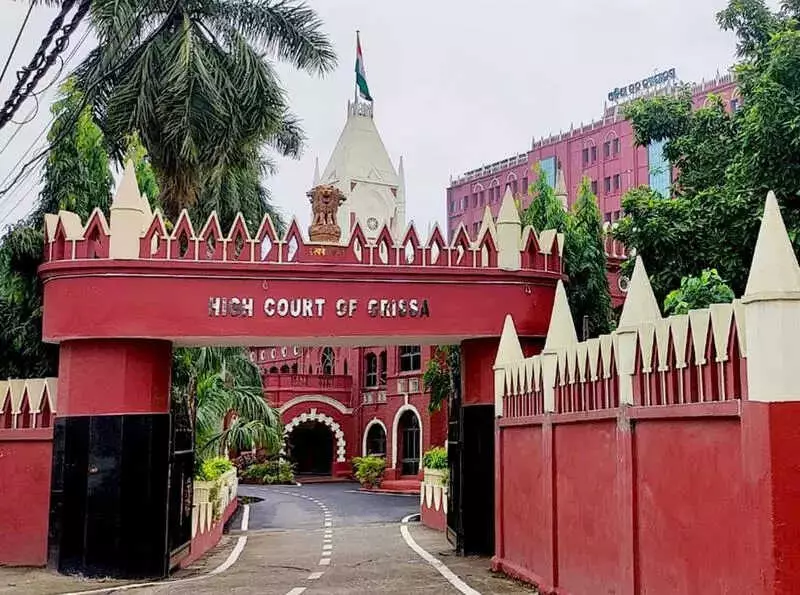
The Orissa High Court has granted the state government a six-week extension to appoint key officials to the Odisha Lokayukta. This anti-corruption body has remained non-functional for more than a year because critical posts are vacant.
Court Sets Deadline After Hearing Petitions
A division bench of the High Court issued this directive on Tuesday. The bench, led by Chief Justice Harish Tandon and including Justice M S Raman, was hearing three separate public interest litigations.
Advocate Prabir Kumar Das, Manoranjan Sahoo, and Satish Kumar Biswal filed these petitions. They highlighted the government's prolonged delay in filling vacancies.

Reason for the Delay
Advocate General Pitambar Acharya represented the state government. He requested additional time before the court. Acharya explained that the government needs to amend the Odisha Lokayukta Act of 2014 first.
"The amendment is necessary to resolve certain discrepancies and anomalies in the selection committee for these appointments," the Advocate General stated.
The court accepted this submission and set a fresh deadline. The bench has scheduled February 24 as the next date to review progress on the appointments.
Impact of the Vacancies
The petitioners argued strongly that government inaction has made the Lokayukta virtually defunct. This situation has brought the adjudication of corruption-related complaints to a complete standstill.
One petitioner presented Right to Information data to illustrate the crisis. The data showed that 444 cases were registered with the Lokayukta in 2024. Of these, only 149 cases have been disposed of so far.
The situation appears even more dire for the current year. From January to May 31, 2023, the body registered 83 new cases. However, not a single case has been disposed of during this period due to the absence of a functioning bench.
Critical Role of the Lokayukta
The Odisha Lokayukta was established to investigate corruption charges against public officials. Its effective operation is fundamental for ensuring transparency and accountability in state governance.
The petitions emphasized this crucial role. They stressed that the prolonged vacancies undermine public trust and allow corruption cases to pile up without resolution.
The High Court's intervention now places the matter on a defined timeline. All eyes will be on the state government to complete the appointment process within the granted six-week period.