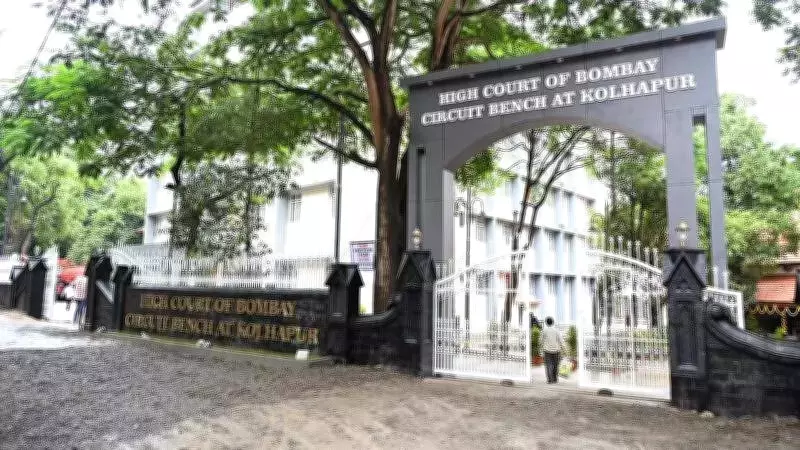
Bombay High Court Directs Notices in PIL for Kalamba Lake and River Revival
The Kolhapur bench of the Bombay High Court has taken a significant step towards environmental conservation by directing notices to be issued to the Kolhapur Municipal Corporation (KMC) and other state authorities. This action comes in response to a Public Interest Litigation (PIL) that urgently seeks the protection and revival of Kalamba Lake and the Panchaganga tributaries, specifically the Jayanti and Gomati Rivers.
Court Proceedings and Petitioner's Plea
On Thursday, a bench comprising Justice R G Avachat and Justice Ajit B Kadethankar ordered, "Issue notice to the respondents, returnable on March 5." The petition was filed by activist Sagar Prakash Ghorpade, represented by advocate Sarjerao Khot, highlighting the critical degradation of these vital water bodies.
According to Ghorpade, the Jayanti and Gomati Rivers, which were once pristine natural freshwater streams, have now deteriorated into wastewater-carrying nullahs. He emphasized the continuous release of untreated sewage into Kalamba Lake and the severe degradation of the Jayanti River, which historically carried clean water from Amrut Kund near the Katyayani temple, flowing into the Panchganga River.
Historical and Cultural Significance
Ghorpade pointed out that several ancient temples and 'teerth kunds' (sacred water tanks) are located along the banks of the Jayanti River, underscoring its cultural and religious importance. Furthermore, he cited the Bombay Presidency Gazetteer, which lists the Jayanti and Gomati Rivers as natural water sources, reinforcing their historical significance.
The petitioner has sought the court's directions for multiple actions:
- An immediate halt to sewage discharge into these water bodies.
- The establishment of an expert committee to monitor and oversee their restoration.
- The declaration of the lake, natural streams, and surrounding temples as Protected Heritage and Eco-sensitive Zones.
Respondents and Broader Implications
Advocate Sarjerao Khot clarified that apart from the KMC, the respondents in this matter include the state urban development department through its principal secretary, the environment and climate change department secretary, and the Maharashtra Pollution Control Board. This broad scope indicates the comprehensive approach required to address the environmental and administrative challenges.
This PIL not only highlights the urgent need for environmental protection but also raises awareness about the preservation of cultural heritage linked to natural resources. The court's intervention could set a precedent for similar cases across Maharashtra, promoting sustainable development and conservation efforts.