
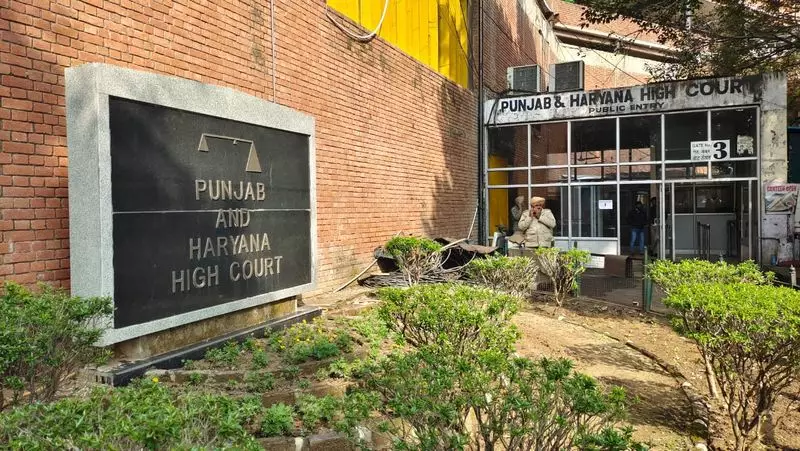
In a significant ruling that clarifies the rights of government employees, the Punjab and Haryana High Court has held that a minor penalty imposed on an official cannot result in the loss of seniority or affect future promotion prospects. The judgment provides crucial protection for employees facing disciplinary proceedings for relatively minor infractions.
Court's Firm Stance on Minor Penalties
The bench, comprising Justice Sanjeev Prakash Sharma, delivered this important verdict while hearing a petition filed by a Punjab government employee. The petitioner had challenged an order that not only imposed a penalty of "censure" upon him but also stipulated that this penalty would have a bearing on his seniority and future promotions. The court scrutinized the relevant service rules and found this combined punishment to be legally unsustainable.
The court explicitly stated that penalties classified as "minor" under the service rules, such as censure or withholding of increments, are meant to be just that—minor. Their purpose is to serve as a warning or a light corrective measure for lapses that are not grave. Therefore, they should not carry long-term career consequences that are typically associated with major penalties like demotion or dismissal.
Quashing the Punitive Order
Justice Sharma's bench allowed the petition, quashing the portion of the punishment order that linked the censure penalty to the employee's seniority and promotions. The court directed the state authorities to reconsider the case and pass a fresh order strictly in accordance with the law. This means the employee can only be given the penalty of censure, without any additional, harsher conditions attached.
The ruling draws a clear and essential distinction between different classes of disciplinary actions. It reinforces the principle that the punishment must be proportionate to the misconduct. Imposing a minor penalty but then allowing it to derail an employee's career progression for years is seen as excessive and unfair. The judgment ensures that a single, non-serious mistake does not become a permanent stain on an employee's service record.
Implications for Government Employees
This decision has far-reaching implications for thousands of government employees across Punjab, Haryana, and Chandigarh. It sets a binding legal precedent that administrative authorities must follow. Disciplinary bodies are now on notice that they cannot arbitrarily attach severe consequences to minor penalties.
The judgment protects employees from potential misuse of disciplinary power, where a minor penalty could be weaponized to stall a career. It upholds the rights of employees to fair treatment and ensures that the path to promotion remains open based on merit and seniority, not unduly hampered by a minor censure from the past.
Legal experts view this as a landmark ruling that brings much-needed clarity to service jurisprudence. It aligns with the broader principles of natural justice, ensuring that the consequences of an action are predictable and just. For government servants, this verdict offers reassurance that their long-term career prospects are safeguarded against disproportionate punishment for minor disciplinary breaches.