The Punjab and Haryana High Court has ordered the governments of Punjab, Haryana, and the Union Territory of Chandigarh, along with power distribution companies, to file a status report on fire safety measures in schools and coaching centres. The report must be submitted by August 10, 2026.
Surprise Inspections Reveal Critical Violations
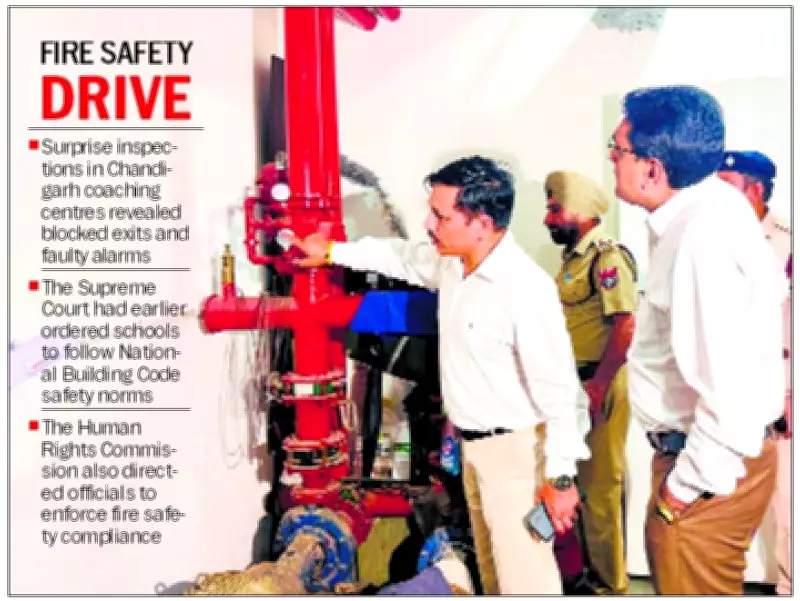
The directive came during a public interest litigation (PIL) filed by advocate Kanwar Pahul Singh. The petition cited a Chandigarh Tribune report from June 24, titled “Surprise check exposes fire safety gaps,” which detailed violations found during surprise inspections of coaching centres in Sector 34. The inspections were conducted by the Municipal Corporation’s fire and rescue services department, supervised by Dr. Inderjeet, Joint Commissioner-cum-Chief Fire Officer, along with station fire officers, following a recent fire incident at a Lucknow coaching centre.
Inspectors discovered classrooms without exit signage, windows blocked with iron grills, and classes being conducted in basements against building rules. Fire alarms and hydrant systems were either non-functional or locked, with keys missing. At most centres, entry and exit points were the same. The institutes inspected included Helix, Allen, Sri Chaitanya Academy, Alex, Head Master’s, Naryana, and PW Vidyapeeth.

Supreme Court Directives and Legal Context
The petitioner argued that the Supreme Court has already directed states and union territories to ensure schools comply with the national building code before granting recognition or affiliation. Existing schools were ordered to install fire-extinguishing equipment within six months. Singh stressed that officers must conduct surveys to identify properties under high- and low-tension electric lines and issue notices to owners about safety risks and legal obligations.
Earlier, the Punjab State and Chandigarh (UT) Human Rights Commission had also taken suo motu cognisance of the same news report. It directed senior officials of Punjab and Chandigarh to enforce fire safety norms, obtain fire safety no-objection certificates from all establishments, and submit compliance reports.