High Court Upholds Life Sentence for SSB Constable in Grisly Family Murder
The Punjab and Haryana High Court has firmly upheld the life imprisonment sentence for a paramilitary soldier. This conviction relates to the brutal 2015 murder of his wife and young son in Mahendragarh, Haryana. The court's decision heavily relied on established principles of medical jurisprudence, specifically concerning how human bodies decompose in water.
Gruesome Details of the Crime Emerge
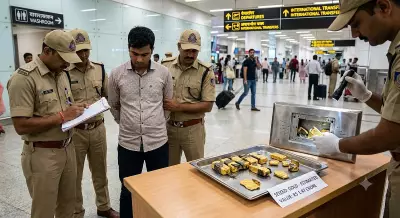
The convict, Dharmender, served as a constable with the Sashastra Seema Bal (SSB). Prosecutors presented a chilling narrative. Dharmender allegedly tied bricks to the bodies of his victims before callously dumping them into a canal. This act was a deliberate attempt to conceal the evidence of his horrific crime.
Defense Arguments Dismantled by Forensic Evidence
In his appeal, Dharmender challenged the conviction on several grounds. He argued that prolonged submersion in water made proper identification of the bodies impossible. Furthermore, he claimed the prosecution failed to establish a clear and consistent timeline linking the injuries, the actual deaths, and the subsequent post-mortem examinations.

A division bench of Justices Gurvinder Singh Gill and Ramesh Kumari meticulously examined these claims. The bench ultimately rejected the defense's position. They turned to authoritative forensic science to explain the evidence.
The court referenced "Modi's Medical Jurisprudence and Toxicology," a standard textbook in forensic medicine. This text explains that human bodies submerged in cold water decompose at a much slower rate compared to bodies exposed to air. In fact, the bench recorded that decomposition can take twice as long under such conditions.
Court Explains Delayed Decomposition in Water
The recent court order made a crucial observation. Putrefaction, or the decay of a body, is significantly delayed when specific conditions are met. A body weighed down deep in cold water and protected by clothing will not show advanced signs of decomposition quickly. These exact circumstances matched the recovery of the two victims in this case.
"The absence of advanced putrefaction, therefore, does not belie the prosecution case," the court stated emphatically. It added that the medical opinion, which placed the time of death between five to ten days before the post-mortem, was forensically sound and reliable.
Compelling Circumstantial Evidence Seals Conviction
The court also highlighted other damning evidence against Dharmender. It noted his unexplained absence from his Delhi unit on December 14, 2015, the very day the murders occurred. Furthermore, he could not account for the bloodstains discovered in his family home.
"The evidence led by the prosecution conclusively proved the chain of circumstances... establishing the guilt of the accused," the bench observed in its order.
The court detailed the horrific sequence of events. Dharmender inflicted fatal injuries on his wife, Reena. He then strangled his young son with a rope. His subsequent attempt to hide the bodies by weighing them down and throwing them in a canal failed to evade justice.
Background of Harassment and a Final Warning
According to the prosecution's case, a motive of harassment and financial demand existed. Reena had frequently complained about being harassed over a demand for one lakh rupees. Tragically, shortly before her death, she warned her father that her life was in grave danger.
When her concerned family visited the home, they found it deserted and stained with blood. Shockingly, Dharmender never reported his wife and son as missing persons. Investigators later recovered the bodies from a canal, still weighed down by bricks.
Medical reports confirmed Reena died from neck injuries. The child succumbed to asphyxia, or strangulation. The accused's attempt to fabricate an alibi was thoroughly debunked. Official SSB duty and mess records confirmed his absence during the critical window when the crime was committed.