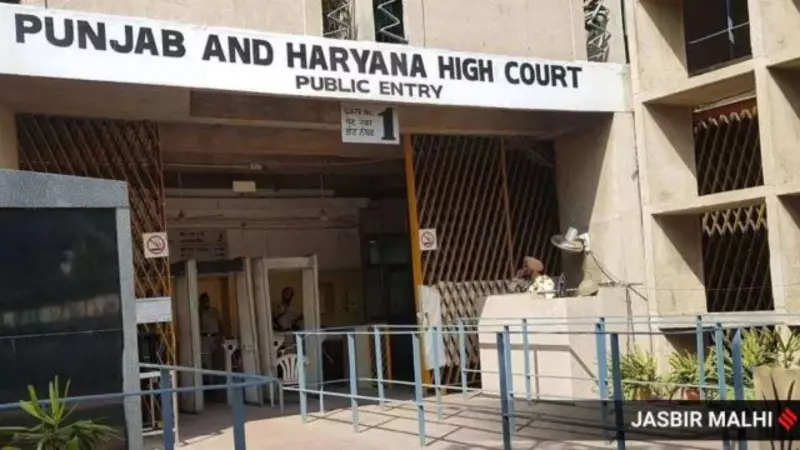
Punjab and Haryana High Court Clarifies Constitutional Powers Over Commercial Courts
The Punjab and Haryana High Court made a significant ruling last week. It stated that parties can approach the High Court under Article 227 of the Constitution. This applies even when challenging interim orders passed by commercial courts. The Commercial Courts Act bars civil revision petitions against such orders. However, the court emphasized that this constitutional power cannot serve as a substitute for an appeal.
Court Rejects Interference in Otsuka-Trans Engineers Dispute
Justice Sudepti Sharma delivered a detailed 91-page ruling on January 12. The court dismissed two connected petitions filed by Otsuka Chemicals India Private Limited. These petitions challenged orders from the Exclusive Commercial Court in Gurgaon. The dispute involves a recovery case with Trans Engineers India Pvt. Ltd.
The commercial court allowed Trans Engineers to file a replication. It also permitted the submission of additional documents and correction of procedural affidavits. A replication is a reply filed by the plaintiff to counter claims made by the defendant in its written statement.

Constitutional Powers Cannot Be Limited by Legislation
Otsuka Chemicals argued that Section 8 of the Commercial Courts Act clearly bars civil revision petitions against interlocutory orders. These are interim orders passed during the pendency of a case. Therefore, Otsuka contended the High Court should not entertain the challenge at all.
The High Court rejected this argument. It held that while Section 8 does bar statutory revision petitions, it cannot limit the constitutional powers of the High Court under Article 227. The court stated these powers flow directly from the Constitution. Legislation cannot take them away.
Article 227 gives High Courts supervisory control over all courts and tribunals within their jurisdiction. This allows them to step in only to correct serious jurisdictional errors or procedural injustice.
High Court Refuses to Interfere with Procedural Orders
Despite upholding its constitutional authority, the High Court refused to interfere with the commercial court's orders. The court observed that Article 227 does not allow the High Court to re-examine cases on merits. It cannot sit as an appellate court.
Its role is limited to ensuring that lower courts act within their authority and follow fair procedure. The High Court found no serious legal error or unfairness in the commercial court's approach. Consequently, it dismissed the petitions.
Background of the Commercial Dispute
The dispute originates from civil and structural work carried out by Trans Engineers. This work was for a chemical plant expansion project of Otsuka Chemicals at Kotpuli in Rajasthan. Trans Engineers was initially appointed as a consultant in 2016. The engagement later expanded into supply and installation works under purchase orders worth about Rs 28 crore.
In 2018, Trans Engineers filed a summary suit seeking recovery of Rs 5.31 crore. It claimed to have carried out additional work beyond the original scope. The company relied on an email where Otsuka allegedly acknowledged liability of Rs 4.15 crore plus GST and interest. This email was sent after Trans Engineers issued a demand notice under the Insolvency and Bankruptcy Code.
The suit initially faced jurisdictional issues. It was returned in 2020 for filing before the appropriate commercial court. Trans Engineers refiled the case in Gurugram in 2022. It was later converted into a regular recovery suit after Otsuka was granted leave to defend.
Procedural Dispute Over Additional Documents
The present petitions stemmed from orders passed in August 2024. These orders allowed Trans Engineers to place further material on record after Otsuka filed its written statement. The commercial court permitted the filing of additional documents. These included purchase orders and email correspondence.
The court granted permission on the ground that these documents were required to respond to defences raised by Otsuka for the first time. Otsuka contended that allowing around 600 pages of documents at this stage was irregular. It argued this caused prejudice.

The High Court disagreed. It noted the case was still at an early stage. Issues had not yet been framed. The court said procedural rules should not be applied so strictly as to prevent a party from properly answering the other side's defence. The opposite party will have a full opportunity to contest the material during trial.
Clarification on High Court's Supervisory Role
The ruling makes an important clarification. While High Courts retain constitutional supervision over commercial courts, they will not interfere with routine procedural orders. Interference will occur only when there is a clear case of abuse of jurisdiction or denial of justice.
This decision reinforces the balance between statutory limitations and constitutional safeguards. It ensures parties have a recourse mechanism for serious grievances without encouraging unnecessary litigation over minor procedural matters.