

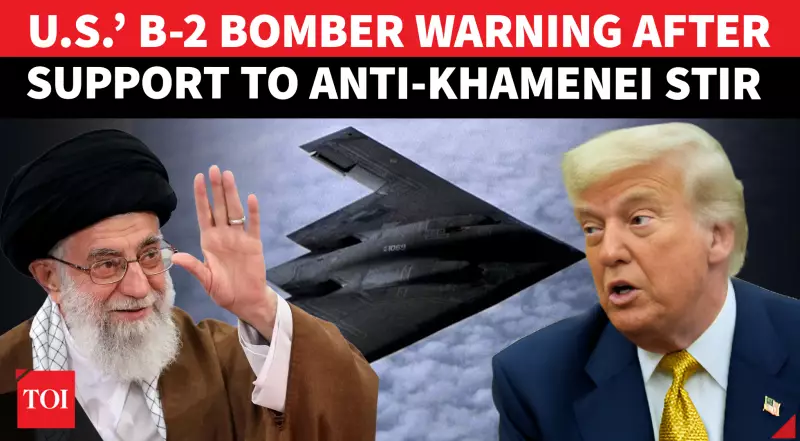
US Secretary of War Pete Hegseth Displays B-2 Bomber Might Amid Iran Tensions
US Secretary of War Pete Hegseth delivered a stern warning to Tehran this week. He spoke as anti-government protests continued to shake Iran. Hegseth made his remarks during the Pentagon's "Arsenal of Freedom" tour. The event took place at a Lockheed Martin facility in Fort Worth, Texas.
Trump's Nuclear Red Line and the B-2 Mission
Hegseth directly referenced President Donald Trump's nuclear ultimatum to Iran. Trump had warned Iran it would never obtain a nuclear weapon. Exactly sixty days after that warning, American forces executed a dramatic demonstration.
Seven B-2 Spirit stealth bombers embarked on a lengthy mission. The aircraft flew for thirty-seven hours straight. During the flight, they dropped fourteen precision-guided munitions. Pentagon officials designed the operation as a clear show of American military strength.

"We wanted to show the world what America is capable of," Hegseth stated plainly. He emphasized the need for rapid weapons production. Hegseth cited the "record speed" at which new global adversaries are emerging.
A Signal of Escalation Amid Iranian Unrest
The Secretary's comments arrive during a period of significant turmoil inside Iran. Nationwide protests against Supreme Leader Ali Khamenei have intensified. The US military demonstration appears timed to this domestic instability.
Analysts view Hegseth's speech as a potential indicator of a new phase. The United States may be preparing for increased military escalation. The combination of internal Iranian dissent and external American pressure creates a volatile situation.
The B-2 bomber, a key component of US strategic air power, served as the centerpiece of this message. Its use in a long-duration, live-fire exercise sends a powerful signal to international observers. The Pentagon continues to stress readiness and industrial capacity as critical priorities.






