Hindu Front for Justice Presents Legal and Historical Arguments for Bhojshala Worship Rights
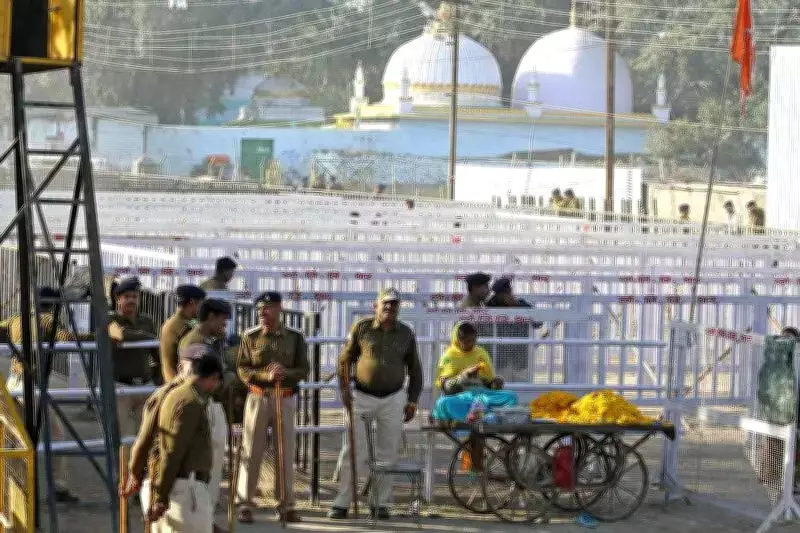
The Hindu Front for Justice (HFJ) presented a detailed legal and historical argument before the Indore bench of the Madhya Pradesh High Court on Wednesday, asserting its claim to exclusive worship rights at the Bhojshala-Kamal Maula complex. The organization's counsel, Vishnu Shankar Jain, argued that this claim rests on two fundamental pillars: the existence of a Hindu temple at the site before the current monument was constructed, and the enduring sacred purpose of the deity regardless of subsequent physical alterations to the structure.
Legal Precedents and Juristic Personality of Deities
Appearing before a bench comprising Justice Vijay Kumar Shukla and Justice Alok Awasthi, Jain extensively referenced court verdicts from the Ram Janmabhoomi-Babri Masjid and Shri Krishna Janmabhoomi-Shahi Idgah cases. He emphasized that a deity's juristic personality—its recognized status as a legal person under Indian law—does not dissolve even if an idol or its housing structure is destroyed. "The contention is not that since we were worshipping at Bhojshala, we have the right to worship. But that the temple existed prior to the current monument, we have the right to worship," Jain told the court.
Jain outlined three core questions for the bench to consider:

- Whether a temple pre-existed the current structure at the site
- Whether that temple was demolished
- Which party holds temporal priority in the matter
"If I am able to establish that a temple was pre-existing… then the legal personality will not diminish," he submitted, tracing the legal evolution of deity jurisprudence through the Ayodhya verdict.
Enduring Sacred Purpose and Constitutional Arguments
The HFJ counsel argued that Hindu idols are recognized as juristic persons in Indian law, and that the "pious purpose" animating a consecrated temple outlives even its physical destruction. "Once a temple, always a temple," he contended, adding that demolition cannot erase the deity's legal standing. He went further to assert that "after demolishing a Hindu idol… the deity exists at the site in invisible form," thereby preserving the rights of devotees to worship there.
Jain also presented constitutional arguments, invoking Article 13(1) which renders pre-constitutional laws void to the extent they conflict with fundamental rights, including the freedom to practice religion guaranteed under Article 25. He argued that Alauddin Khilji's act of demolishing the temple, being inconsistent with these rights, "automatically turns void."
Historical Evidence and Legal Exemptions
Turning to historical records, Jain cited affidavits filed by respondent no. 8, Maulana Kamaluddin Welfare Society, to argue that the case's own respondents had acknowledged the existing mosque was constructed by Alauddin Khilji in 1305 AD after demolishing a Saraswati temple, and that temple material was used in its construction. "Records clearly prove beyond doubt that a temple pre-existed the current monument," he stated emphatically.
Addressing the Places of Worship (Special Provisions) Act, 1991, Jain noted that while Section 3 bars the conversion of places of worship—a provision that supports his case if the site is proven to have originally been a temple—Section 4(3)(a) explicitly exempts ancient historical monuments and archaeological sites governed by the Ancient Monuments and Archaeological Sites and Remains Act, 1958. Bhojshala, he argued, falls within that exemption and is therefore outside the Act's purview.
Challenges to Waqf Claims and Concluding Arguments
Jain also challenged the respondents' reliance on a January 18, 1985 waqf notification, citing Section 3D of the Waqf Amendment Act, 2025, which renders void any declaration or notification relating to a protected monument. He further argued that under Islamic law, a valid waqf requires both ownership by the wakif and a formal deed of dedication—neither of which exists in this case. "In this particular case, there is no deed of dedication, and there is not a valid waqf," he submitted.

The hearing, which has been ongoing for three consecutive days, is set to continue for a fourth day on Thursday as the court considers these complex legal and historical arguments regarding one of Madhya Pradesh's most significant religious sites.