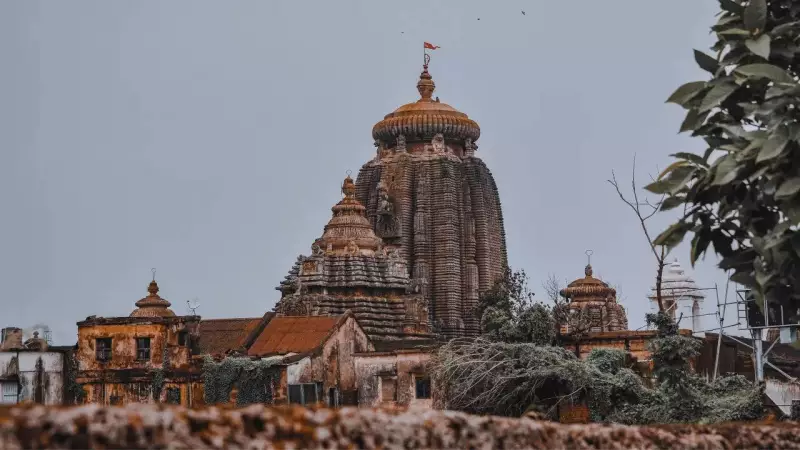
The Orissa High Court has stepped in to stop a key ritual at the famous Shree Lingaraj Temple in Cuttack. This action has halted Makar Sankranti celebrations at the shrine for the second year in a row.
Court Questions Collector's Authority
A division bench of Justices K R Mohapatra and S K Mishra issued an interim order on Monday. They stayed an order from the Khurda collector dated December 24, 2025. The collector serves as president of the Shree Lingaraj Temple Trust.
The court made a clear observation. It stated that the collector lacks statutory authority to decide disputes over sevayat rights. Sevayats are temple servitors who perform rituals.

"Allowing such an order could lead to future complications," the court noted. The bench directed that the collector's order be kept in abeyance until further consideration.
Long-Standing Dispute Between Sevayat Groups
The case involves a petition filed by sevayat Kamalakanta Badu. He challenged the collector's order about a ritual called 'Dugdha Melana'. This ritual is part of the 'Nabanka Bedha Niti' observed a day before Makar Sankranti.
The dispute centers on two groups of sevayats. These are the Badu nijog and the Brahman nijog. Both groups have claimed rights to perform specific rituals for years.
The impugned order had decided that Brahman sevayats would perform 'Dugdha Melana'. Meanwhile, Badu servitors would perform 'Ghruta Kamala' on Makar Sankranti morning.
The petitioner clarified an important point. Badu sevayats do not object to performing 'Ghruta Kamala'. However, they strongly challenge the decision about 'Dugdha Melana'.
Legal Arguments Presented in Court
Advocate Amiya Kumar Mishra appeared for the petitioner. He submitted that the collector overstepped his jurisdiction. While the collector aimed to ensure smooth festival conduct, he adjudicated rights he cannot decide.
Mishra cited Section 41 of the Odisha Hindu Religious Endowments Act, 1951. He argued that only the assistant commissioner of endowments in Bhubaneswar can decide disputes about niti and sevayat rights.
Advocate Suvendu Kar represented Lord Lingaraj before the court. He agreed that the temple trust president lacks competence to settle such rights. However, he requested the order operate for this Makar Sankranti to ensure uninterrupted rituals.
Supporting this view, advocate Bishal Baivab appeared for the Brahman Nijog Samiti. He sought time to file a detailed counter affidavit.
Historical Context of the Ritual Dispute
This is not the first time this ritual has faced disruption. Until 2024, Badu Nijog members performed the ritual without issue.
In 2025, Mahasuar Nijog servitors insisted they should perform 'Ghruta Kamala'. This led to a two-day stall in the ritual. The then Khurda collector then ordered that Brahman Nijog members should perform it.
Badu Nijog members challenged this decision in the High Court. They filed the petition that led to Monday's interim order.
Immediate Consequences for Makar Sankranti
The court's decision has immediate practical effects. Biranchi Narayan Pati, head of Brahman Nijog, confirmed the situation.
"Neither was the Ghruta Kamala prepared or the Nabanka Bedha Niti carried out," Pati said. "So, the ritual on Wednesday will not be carried out."
This means Makar Sankranti celebrations at the temple face disruption again. Last year saw similar issues, making this the second consecutive year of halted rituals.
Next Steps in the Legal Process
The court has listed the matter for further hearing on February 26. All parties can file their counter affidavits in the meantime.
The petitioner approached the High Court citing urgency. The ritual was scheduled for January 13, making quick judicial intervention necessary.
The court's interim order now stands. It prevents the collector's decision from taking effect until proper legal examination occurs.