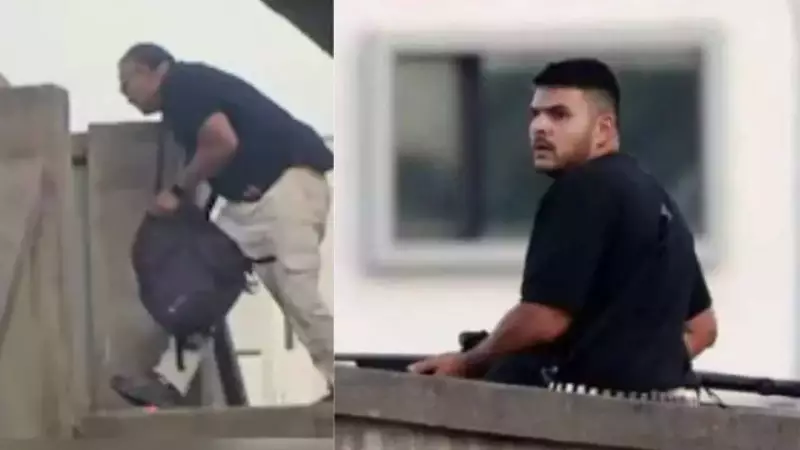
Australian authorities have identified the terror suspect shot dead following the deadly attack at Sydney's Bondi Beach as Sajid Akram, a 50-year-old man of Indian origin from Hyderabad. The Sunday assault resulted in 15 fatalities and left 40 individuals injured, including three Indian students.
Hyderabad Roots and Fading Family Ties
Investigations by Telangana Police and intelligence agencies traced Sajid Akram's roots to Al Hasnath Colony in Hyderabad's Toli Chowki area. His father was a retired armed forces officer and his elder brother is a doctor. However, family contact was severely limited after Sajid migrated to Australia in November 1998.
Telangana's Director General of Police, Shivadhar Reddy, stated that Sajid visited India only six times in 27 years, primarily to handle property matters. Notably, he did not attend his father's funeral in 2009. The family told police they were unaware of when or how Sajid and his 24-year-old son, Naveed, the second suspect, were radicalised.

Radicalisation Trail Points to Sydney, Not India
Police officials have clarified that the factors leading to the radicalisation of the father-son duo appear to have no connection with India. "Reports indicate that they were inspired by ISIS ideology. Factors leading to their radicalisation appear to have no connection with India," DGP Reddy confirmed. He also noted that Sajid had no adverse criminal record in India prior to his emigration.
Australian authorities suspect both were radicalised in Sydney. Naveed is reported to have attended Arabic and religious courses in Sydney between 2019 and 2022. Media reports suggest the pair travelled to the Philippines in November 2025, where they may have received military-style training, before returning to Sydney.
Profile of the Attacker and Aftermath
Sajid Akram was a commerce graduate from Hyderabad's Anwar-Ul-Uloom College. He later married an Australian woman, Venera Grosso, and the couple had a son and a daughter. Sources indicate he brought his wife to Hyderabad around 2001 for a traditional nikah and to meet his parents. On later visits, he sold his share of ancestral property in the city's Sha Ali Banda area.
New South Wales Police Commissioner Mal Lanyon revealed that Naveed's vehicle contained improvised explosives and two homemade ISIS flags. Meanwhile, among the 40 injured in the brutal attack, three are Indian students, two of whom remain hospitalised.
The investigation underscores a tragic case of radicalisation on foreign soil, severing a man from his Hyderabad origins and leading to a devastating act of violence thousands of miles away.