India Unintentionally Entangled in Escalating Middle East Conflict
India has found itself inadvertently drawn into the volatile Middle East conflict, not through any deliberate policy choice, but as a consequence of its geographical position, historical ties, and the uncontrollable spillover effects from the intensifying war between the United States, Israel, and Iran. This complex situation has thrust New Delhi into a precarious geopolitical spotlight, forcing it to navigate treacherous diplomatic waters.
The Provocative Naval Incident in India's Maritime Zone
The immediate catalyst for India's entanglement was a dramatic naval confrontation. The Iranian naval frigate, IRIS Dena, was torpedoed and sunk by a United States submarine. This hostile action occurred alarmingly close to India's maritime neighborhood, raising immediate security concerns. The incident was particularly sensitive as the IRIS Dena had, just days prior, participated in diplomatic engagements by docking at Visakhapatnam port for India's prestigious International Fleet Review. This sequence of events—from friendly port call to military destruction in nearby waters—highlighted how external conflicts can rapidly encroach upon India's strategic space.
New Delhi's Measured Response Sparks Domestic Political Firestorm
India's official reaction to the broader conflict, particularly following the killing of Iran's Supreme Leader Ayatollah Ali Khamenei, was characteristically measured and subdued. This cautious diplomatic stance, aimed at maintaining balance, unexpectedly ignited a fierce and polarized political debate within India. Critics and supporters clashed over the government's approach, debating whether New Delhi's response was appropriately calibrated or dangerously passive in the face of regional turmoil.
Economic Vulnerabilities: The Looming Threat to Energy Security
Beyond immediate security and diplomacy, the conflict struck at India's economic core. Acute anxiety over soaring oil prices swept across the nation as the West Asia confrontation threatened to choke the world's most critical energy artery: the Strait of Hormuz. As a major energy importer, India's economy is exceptionally vulnerable to disruptions in these global supply routes, making stability in the Persian Gulf a direct national interest.
Anand Ranganathan Cuts Through the Social Media Fog
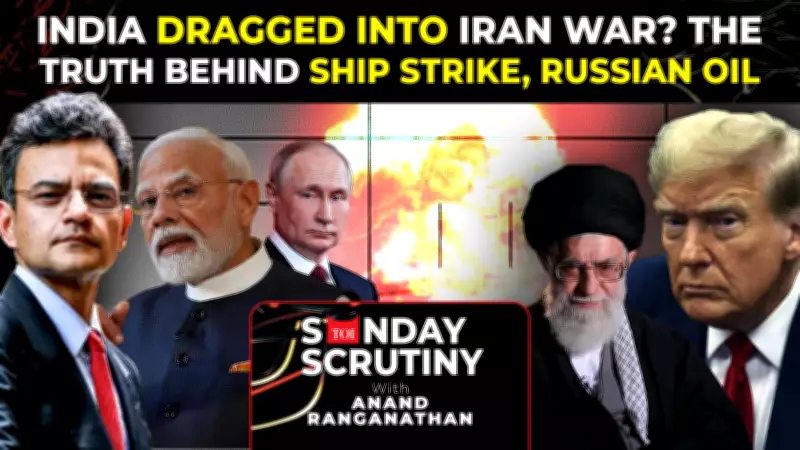
Amid this crisis, commentator Anand Ranganathan, on his program Sunday Scrutiny, undertook the crucial task of dissecting the rampant misinformation. On social media platforms, half-truths, wild speculation, and outright falsehoods about India's role were spreading far faster than verified facts. Ranganathan's analysis aimed to pierce through this noise to address three fundamental questions:
- What actually happened? Providing a clear, factual timeline of the naval incident and its geopolitical context.
- What are India's real vulnerabilities? Examining the nation's exposure in terms of security, diplomacy, and economic stability.
- Was the domestic outrage directed at New Delhi justified? Assessing whether the government's cautious response was a strategic necessity or a failure of leadership.
His scrutiny provided a much-needed rational perspective in a highly charged information environment, focusing on India's complex position where geography and global power struggles intersect.