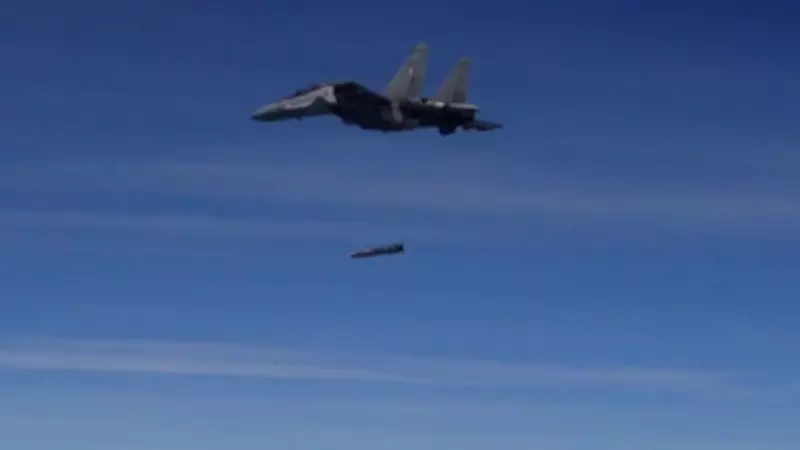
India achieved a significant milestone in its defense capabilities on Wednesday with the successful flight test of the Rudram-II air-to-surface missile. The test was conducted from an airborne platform off the coast of Odisha, showcasing the country's growing prowess in indigenous missile technology.
Successful Test from Su-30 MKI
The Rudram-II missile was launched from a Sukhoi Su-30 MKI fighter jet of the Indian Air Force. The test validated the missile's advanced guidance and control systems, as well as its ability to engage targets with high precision. The missile is designed to neutralize enemy air defense systems, radar installations, and other high-value ground targets.
Indigenous Development by DRDO
The Defence Research and Development Organisation (DRDO) developed the Rudram-II as part of India's efforts to enhance its anti-radiation missile capabilities. The missile features a state-of-the-art seeker that can home in on enemy radar emissions, making it a potent tool for suppression of enemy air defenses (SEAD) missions. The successful test marks a major step forward in making the Indian Air Force more self-reliant in terms of advanced weaponry.

Key Features of Rudram-II
- Range: The missile is believed to have a range of over 150 kilometers, allowing pilots to engage targets from a safe distance.
- Speed: It can travel at hypersonic speeds, reducing the time available for enemy defenses to react.
- Guidance: The missile uses an inertial navigation system (INS) coupled with GPS and a passive homing seeker for terminal guidance.
- Versatility: It can be integrated with various fighter aircraft, including the Su-30 MKI, MiG-29, and the indigenous Tejas.
Strategic Implications
The successful test of Rudram-II underscores India's commitment to developing cutting-edge defense technologies. It enhances the Indian Air Force's ability to carry out deep penetration strikes against enemy air defenses, thereby ensuring air superiority in contested environments. The missile is expected to be inducted into service soon, further bolstering India's defense preparedness.
Defense experts have lauded the test as a testament to the DRDO's capabilities in developing complex weapon systems. The Rudram-II is part of a family of anti-radiation missiles being developed by India, which includes the Rudram-I, designed for shorter-range engagements.
Future Developments
With the successful flight test, the DRDO will now focus on series production and integration of the missile with more aircraft types. The Indian Air Force plans to equip its frontline fighters with Rudram-II to enhance their combat effectiveness. The missile's development also aligns with the government's 'Make in India' initiative, promoting indigenous defense manufacturing.
In conclusion, the Rudram-II missile test represents a leap forward in India's military capabilities, providing a credible deterrence against potential adversaries and reinforcing the nation's status as a regional power.