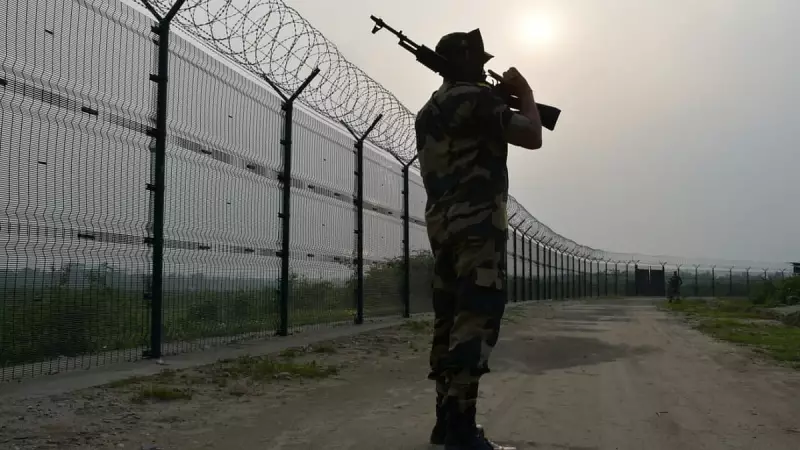
Indian security forces have issued a strong rebuttal to allegations made by Bangladesh regarding the cross-border movement of individuals involved in a high-profile murder case. The Border Security Force (BSF) and Meghalaya Police have categorically rejected claims that the killers of a student leader in Bangladesh entered Indian territory.
Bangladesh's Allegation and India's Investigation
The controversy began when Bangladeshi authorities suggested that suspects involved in the murder of student leader Md. Hadiuzzaman Hadi might have crossed into India's Meghalaya state to evade capture. Hadi, a prominent figure with the Bangladesh Chhatra League (BCL) in Moulvibazar district, was brutally attacked and later succumbed to his injuries on July 10, 2024.
Following this allegation, Indian security agencies launched a thorough investigation. Officials from the BSF, which guards the international frontier, and the state police of Meghalaya coordinated closely to verify the claims. Their findings were unequivocal: there was no evidence to support the theory that the perpetrators crossed the border into India.
Official Rejection and Security Coordination
In an official statement, a senior BSF officer clarified the position. "We have thoroughly checked all our records, surveillance data, and patrol logs for the relevant period and area. There is no indication of any such illegal crossing as alleged," the officer stated. The Meghalaya Police echoed this sentiment, confirming that their intelligence network and ground checks yielded no information about the suspects' presence in the state.
The investigation highlighted the robust coordination between the BSF and Meghalaya Police. Key steps taken included:
- Reviewing electronic surveillance footage from border outposts.
- Conducting joint inquiries with village authorities and local informants along the border.
- Cross-verifying intelligence inputs with central agencies.
The conclusion was that the claim made by Bangladesh was baseless.
Context of the Hadi Murder Case
The murder that sparked this diplomatic exchange was both violent and politically sensitive. Md. Hadiuzzaman Hadi, a leader of the ruling Awami League's student wing, was attacked by a group of assailants. The incident, which took place in the Sreemangal area of Moulvibazar, sent shockwaves through the region. Bangladeshi media reported that the attack was potentially linked to internal conflicts within the student political organization.
Following Hadi's death on July 10, Bangladeshi law enforcement agencies intensified their search for the killers. It was during this manhunt that the theory of a cross-border escape emerged, leading to the formal communication with Indian authorities.
Implications for India-Bangladesh Relations
This incident underscores the delicate nature of border management and security cooperation between the two neighboring countries. India and Bangladesh share a long, porous border, particularly in states like Meghalaya, making communication and verified intelligence sharing paramount.
While India has rejected this specific claim, officials emphasize that security cooperation with Bangladesh remains strong. Both nations routinely collaborate on trans-border crime, smuggling, and insurgent activities. The swift Indian investigation and clear communication of its findings are seen as part of maintaining this crucial partnership based on factual accuracy.
The Meghalaya Police have reiterated their commitment to border security and stated that they remain vigilant against any attempt to use the state's territory for illegal activities. They also affirmed their readiness to assist Bangladeshi authorities if credible, evidence-based information is shared through proper diplomatic or established law enforcement channels.