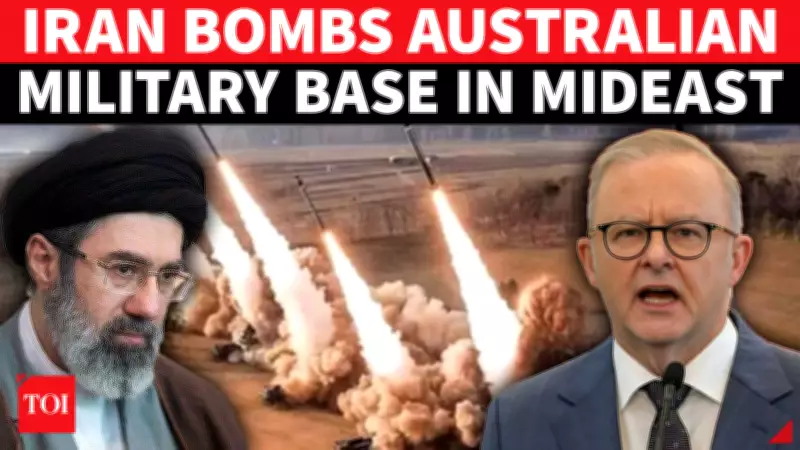
Iranian Missile Strikes Near Australian Military Base In United Arab Emirates
In a significant escalation of regional hostilities, an Iranian missile struck in close proximity to the Australian military's Al Minhad Air Base located within the United Arab Emirates on Wednesday. The incident resulted in minor structural damage but, fortunately, no casualties were reported among personnel.
Prime Minister Anthony Albanese Confirms Details Of The Attack
Australian Prime Minister Anthony Albanese publicly confirmed the missile strike, providing crucial details about the event. According to his statement, the projectile impacted a roadway leading directly to the base at approximately 9:15 a.m. local time. The impact ignited a localized fire that subsequently affected an accommodation block and a medical facility on the base premises.
"All Australian personnel stationed at Al Minhad Air Base are confirmed to be safe and accounted for," Prime Minister Albanese emphasized during his address. He further disclosed that he had engaged in immediate discussions with Defence Minister Richard Marles following the attack to assess the situation and coordinate the national response.

Context Of Unpredictable Iranian Aggression In The Gulf Region
Prime Minister Albanese highlighted a concerning pattern of behavior, noting that "the Iranian regime continues to carry out unpredictable and destabilizing attacks across the broader Gulf region." This statement underscores the volatile security environment that has been intensifying in recent months.
The missile strike against the Australian facility occurs against a backdrop of sustained Iranian military actions targeting Israel and various neighboring Gulf states. These operations have created a complex and dangerous geopolitical landscape, raising alarms among international observers and defense analysts.
Australia's Defensive Posture And Regional Security Role
Australia maintains a strategic defensive presence in the United Arab Emirates, which includes the deployment of advanced military assets. Notably, an E-7 Wedgetail aircraft is stationed at Al Minhad Air Base, serving a critical role in regional surveillance and security operations. This aircraft is part of Australia's commitment to supporting stability and monitoring threats in the area.
The Australian government has reiterated that its military activities in the UAE are purely defensive in nature, aimed at contributing to collective security efforts and protecting vital international interests. The presence of forces at Al Minhad is aligned with broader coalition objectives to deter aggression and maintain open lines of communication in a strategically important region.
Implications For Regional Stability And International Relations
This direct attack on infrastructure associated with a key Western ally signals a potential broadening of Iranian military strategy. Key implications include:
- Increased Risk To Foreign Military Assets: The strike demonstrates that Iranian forces are willing to target facilities used by international partners, not just regional adversaries.
- Escalation Of Gulf Tensions: The incident adds another layer of complexity to an already tense situation, with multiple nations now directly affected by Iranian actions.
- Operational Security Challenges: Military bases in the region may need to enhance their defensive measures and alert protocols in response to this new threat vector.
- Diplomatic Repercussions: Australia is likely to engage in heightened diplomatic discussions with allies and through international forums to address this breach of security.
The confirmation of damage, however minor, to Australian military infrastructure represents a tangible escalation in the ongoing regional conflict. It underscores the unpredictable nature of current hostilities and the challenges faced by nations attempting to maintain security partnerships in the Gulf. The international community will be closely monitoring Australia's response and any subsequent developments in this rapidly evolving situation.