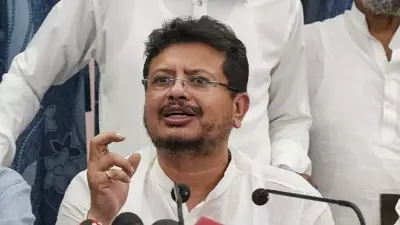
In a significant development for the Uttar Pradesh judiciary, Justice Jai Krishna Upadhyay was officially sworn in as a judge of the prestigious Allahabad High Court on Wednesday. The oath ceremony marks a new chapter in his legal career and brings a fresh face to the bench of one of India's largest high courts.
Oath Ceremony Presided by Chief Justice
The solemn oath-taking event was conducted in the court room of Chief Justice Arun Bhansali, who administered the oath of office to Justice Upadhyay. The ceremony formalized his appointment following a notification issued by the Union Ministry of Law and Justice on January 5. This procedural step is the culmination of the appointment process for judges to the higher judiciary.
From Advocate to Judge: Upadhyay's Legal Journey
Prior to his elevation to the bench, Justice Jai Krishna Upadhyay served the state in the capacity of the Additional Government Advocate (AGA) for the Uttar Pradesh government at the Allahabad High Court. In this role, he represented the state in various legal matters, gaining extensive experience and insight into the functioning of the court where he will now serve as a judge. His transition from a government lawyer to a judge is a notable career progression within the legal framework.

Impact on Court's Working Strength
The induction of Justice Upadhyay has a direct impact on the court's composition. With this appointment, the total number of judges in the Allahabad High Court has now reached 110. However, this figure still falls short of the court's fully authorized capacity. The sanctioned strength of the Allahabad High Court is 160 judges, indicating a continuing vacancy of 50 positions. This gap between actual and sanctioned strength is a focal point for discussions on judicial efficiency and case backlog management.
The appointment is seen as a step towards optimizing the court's functioning. A full or near-full bench is crucial for the timely disposal of the massive caseload that the Allahabad High Court handles. Each new judge appointment helps in addressing the pendency of cases and ensuring speedier justice for the people of Uttar Pradesh.