

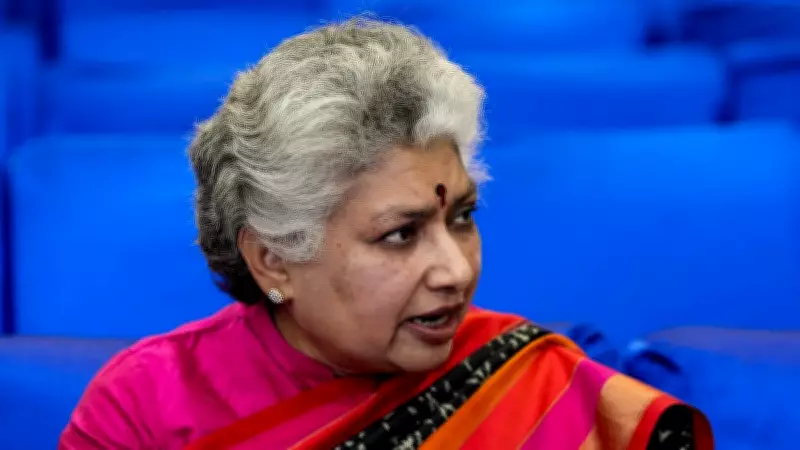
Supreme Court Justice Nagarathna Declares Women Cannot Be Treated as 'Untouchable' for Three Days
In a landmark hearing, Justice B V Nagarathna of the Supreme Court of India made a powerful statement, asserting that a woman cannot be treated as 'untouchable' for three days. This remark came during proceedings before a nine-judge constitutional bench, which is currently examining critical petitions concerning discrimination against women at various religious places across the country.
Nine-Judge Bench Examines Discrimination at Religious Sites
The bench, comprising nine esteemed justices, is delving into a series of petitions that highlight issues of gender-based discrimination at religious institutions. A primary focus of these hearings is the Sabarimala temple in Keralam, where traditional practices have historically restricted the entry of women of menstruating age. The court is also exploring the broader ambit and scope of religious freedom as practised by multiple faiths throughout India.
Justice Nagarathna's emphatic comment underscores the judiciary's commitment to upholding gender equality and challenging discriminatory customs that infringe upon fundamental rights. Her statement directly addresses the practice at Sabarimala, where women are often barred from temple premises for three days during menstruation, a rule that has sparked widespread debate and legal challenges.

Broader Implications for Religious Freedom and Gender Equality
This hearing is part of a larger constitutional review aimed at balancing religious freedoms with the principles of equality and non-discrimination enshrined in the Indian Constitution. The Supreme Court is tasked with determining whether certain religious practices that exclude women violate constitutional mandates.
The proceedings have garnered significant attention, as they could set a precedent for how religious institutions across India address gender inclusivity. Legal experts suggest that the outcome may influence not only the Sabarimala case but also similar disputes involving other religious sites where women face restrictions.
As the bench continues its deliberations, the nation watches closely, anticipating a ruling that could reshape the landscape of religious practice and gender rights in India. The court's decision is expected to provide clarity on the limits of religious autonomy in relation to fundamental human rights.






