

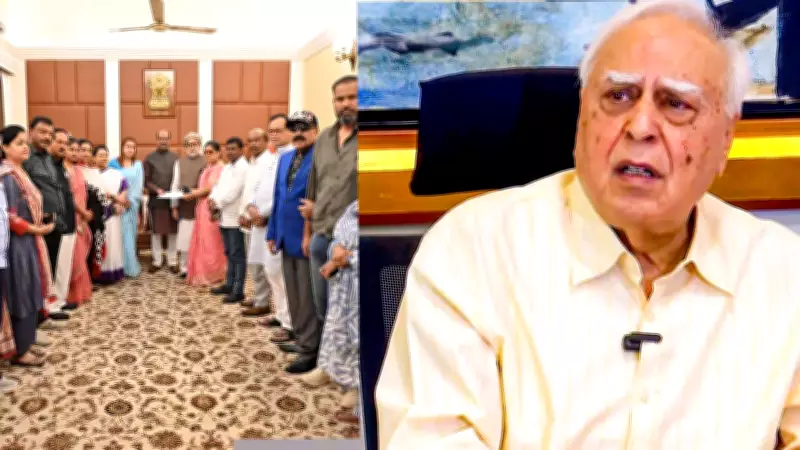
In a significant political development, rebel MPs from the Trinamool Congress (TMC) have announced their intention to merge with the Nationalist Citizens' Party of India (NCPI). This move has taken a sharp legal turn as senior Rajya Sabha MP Kapil Sibal has called for the disqualification of these rebel MPs.
Sibal's Strong Statement
In a strongly worded statement, Sibal termed the proposed merger a "theatre of the absurd," questioning its legality under India's constitutional framework. He argued that individual MPs or factions do not have the authority to independently decide on a merger with another party. According to Sibal, such authority lies solely with the original political party.
Constitutional and Legal Implications
The controversy has intensified as the NCPI, a relatively lesser-known registered unrecognised political party, becomes central to this high-stakes political realignment. Rebel TMC MPs are reportedly using the party as a route to reposition themselves while indicating support for the National Democratic Alliance (NDA). With constitutional provisions and the anti-defection law now under scrutiny, the focus shifts to the Lok Sabha Speaker. The Speaker's decision will determine whether this move stands or leads to disqualification.

The anti-defection law, enshrined in the Tenth Schedule of the Constitution, prohibits MPs from defecting from their party. Any merger must involve at least two-thirds of the party's members, and even then, the decision must be taken by the party, not by individual legislators. Sibal's intervention highlights the potential breach of these provisions.
Political Ramifications
The rebellion within the TMC and the proposed merger with NCPI could have far-reaching consequences for the political landscape. If the Speaker rules against the merger, the rebel MPs could face disqualification, which would trigger by-elections in their constituencies. This could alter the balance of power in the Lok Sabha and impact the stability of the government.
Meanwhile, the NCPI, which has little electoral presence, stands to gain prominence through this move. However, its role as a vehicle for defection has drawn criticism from various quarters, with many questioning the ethical and legal basis of such realignments.
As the matter unfolds, all eyes are on the Lok Sabha Speaker, whose decision will set a precedent for future cases of party mergers and defections. The outcome will not only affect the rebel TMC MPs but also shape the interpretation of the anti-defection law in India.






