Karnataka High Court Rejects NIA's Petition for Case Transfer Against CPI (Maoist) Member
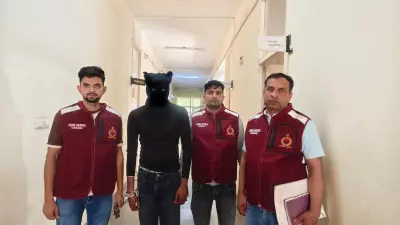
The Karnataka High Court has upheld a trial court order that rejected the National Investigation Agency's plea to transfer a case against Anirudda Rajan, a member of the banned CPI (Maoist), from Bengaluru to Uttar Pradesh. The court noted that Rajan is currently only a suspect in the Uttar Pradesh case and has not been formally named as an accused or chargesheeted there.
Details of the Court's Decision
A division bench comprising Justice D K Singh and Justice S Rachaiah delivered the judgment, stating, "As of today, the second respondent (Rajan) is not an accused nor a chargesheet has been filed against him before the NIA Court of Lucknow. We, therefore, do not find that the Trial Court has committed an error of law or jurisdiction." The bench emphasized that the trial court's decision was legally sound and within its jurisdictional limits.
Background of the Case
Anirudda Rajan, a resident of Tamil Nadu, was arrested by the Bengaluru police in 2024. He is currently under investigation by the Central Crime Branch under Section 10 of the Unlawful Activities (Prevention) Act, which penalizes membership in an unlawful association, along with other relevant enactments. His case is pending before the Special Judge for Trial of NIA Cases in Bengaluru.

Legal Provisions and Agency Powers
The National Investigation Agency Act, 2008, under Section 8, empowers the central agency to investigate any other offence allegedly committed by the accused if it is connected with a scheduled offence. The NIA also has the authority to investigate all related offences and may seek the transfer of cases for trial at a single location for convenience. However, in this instance, the court found that the conditions for such a transfer were not met.
Future Possibilities for the NIA
Despite rejecting the current petition, the Karnataka High Court has granted liberty to the NIA to file an application at an appropriate stage if Rajan is formally made an accused in the case pending in Uttar Pradesh. This provision allows the agency to revisit the transfer request should the circumstances change in the future.
The court's decision underscores the importance of procedural correctness and jurisdictional boundaries in high-stakes legal matters involving national security and anti-terrorism laws. It highlights the judiciary's role in ensuring that investigative agencies adhere to legal standards while pursuing cases against alleged members of banned organizations.