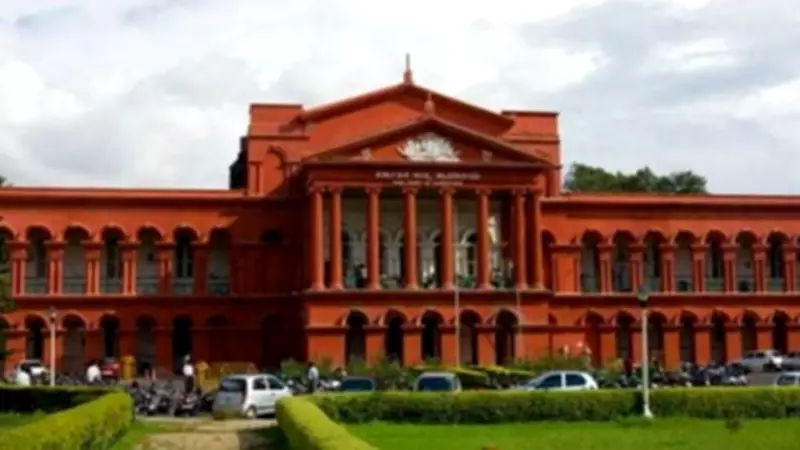
The Karnataka High Court has firmly rejected a petition seeking to quash a criminal case related to the alleged circulation of obscene and offensive images depicting Hindu deities and political figures in a WhatsApp group. In a significant ruling, the court emphasized that free speech cannot be used as a cover for content that threatens public order and communal harmony.
Court's Stance on Free Speech and Public Order
Justice M Nagaprasanna, presiding over a single-judge bench, dismissed the petition filed by Sirajuddin, a 30-year-old resident of Dakshina Kannada. The accused faced charges under Section 295A of the Indian Penal Code, which deals with outraging religious feelings, and Section 67 of the Information Technology Act. The case originated from a 2021 complaint by K Jayaraj Salian, who alleged that upon joining a WhatsApp group via a shared link, he encountered repeated postings of deeply offensive material targeting Hindu deities and certain political personalities.
The bench, after reviewing investigation records and the images from the group, stated that the content was so inappropriate that reproducing it in a judicial order would be unsuitable. Justice Nagaprasanna remarked, "The material on its face has the tendency to outrage religious feelings and disturb communal harmony." He further clarified that even if an insult does not immediately lead to disorder, actions with the potential to disrupt public order fall under reasonable restrictions on free speech, adding, "In the garb of free speech anything and everything cannot be countenanced."

Legal Proceedings and Investigation Concerns
The court also addressed procedural arguments raised by the petitioner. It rejected the contention that prior sanction is necessary before registering an offence under Section 295A of the IPC, holding that such sanction is required only at the stage of cognizance, not for crime registration or investigation. "Investigation precedes prosecution," the court noted, refusing to halt the ongoing probe and warning that premature interference could stifle a lawful enquiry into serious allegations.
Additionally, the bench expressed concern that the investigation had not targeted all administrators of the WhatsApp group, which reportedly had six administrators and nearly 250 participants. Justice Nagaprasanna urged that if the probe reveals any member actively involved in permitting the circulation of such images, they must be held accountable. This underscores the court's commitment to ensuring thorough legal scrutiny in cases involving digital platforms and religious sensitivities.