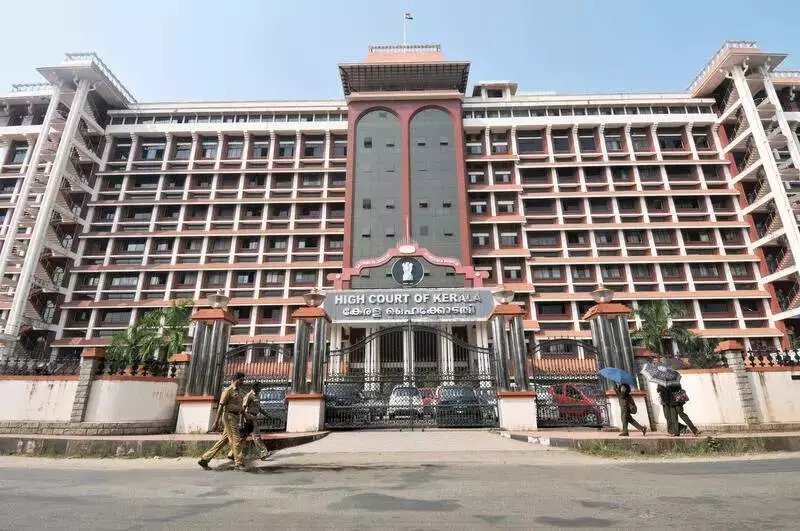
In a significant legal development, the Kerala High Court on Tuesday acquitted seven individuals who had been serving life imprisonment for the 2009 murder of a man named Jyothish in Kannur. The court allowed their appeal, setting aside the conviction and sentence previously handed down by the Thalassery Additional Sessions Court.
Court Finds Flaws in Trial Court's Judgment
The bench, comprising Justices A K Jayasankaran Nambiar and Jobin Sebastian, was hearing the appeals filed by Manden Babinesh, T N Nikhil, T Rijul Raj, C Shahan Raj, V K Vineesh, K P Vimal Raj, and M Tony. These men were originally arrayed as accused numbers 1, 3, 5, 6, 7, 10, and 12 in the case.
The High Court delivered a scathing critique of the trial court's judgment. It observed that the sessions court had relied almost entirely on the testimonies of just three prosecution witnesses. Furthermore, the HC noted that the lower court had mechanically dismissed the objections raised by the defence without proper consideration.

Lack of Concrete Evidence Leads to Acquittal
The prosecution's case stemmed from an incident on September 28, 2009. According to the charges, an initial altercation occurred between Jyothish, a native of Thayyil in Kannur, and the first accused, Babinesh, at a street food shop around 8 pm. Later that night, around 11 pm, Jyothish was allegedly attacked by Babinesh and others while he was leaving a movie hall after watching the second show with a friend. He was reportedly stabbed and assaulted with swords and iron rods, succumbing to his injuries in the hospital.
After the trial, the sessions court had convicted these seven accused and sentenced them to life imprisonment, while acquitting five others. The convicts subsequently challenged this verdict in the High Court.
The HC's ruling highlighted critical gaps in the evidence. The court pointed out that apart from the identification by the witnesses, there was no other evidence linking the appellants to the crime. It also noted that the forensic reports concerning the clothing of the accused were inconclusive. Crucially, the court stated these reports could not be legally relied upon because their contents were not put to the accused during their examination, a vital procedural safeguard.
Contradictions and the Final Verdict
Adding to the prosecution's woes, the High Court identified several contradictions in the statements of the witnesses. After a comprehensive review, the bench concluded that there was no reliable evidence on record to firmly connect the appellants with the crime.
Holding that the prosecution failed to prove its case beyond a reasonable doubt, the Kerala High Court allowed the appeal and acquitted all seven men, overturning their life sentences.