

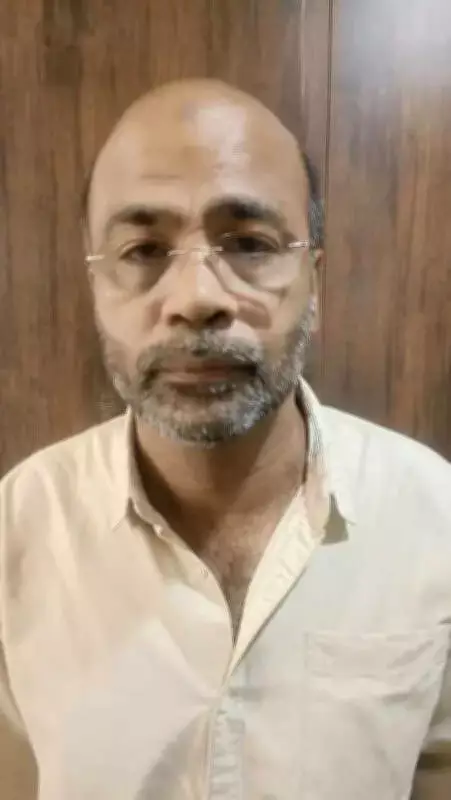
In a significant breakthrough, the Ernakulam Rural police on Sunday arrested the alleged mastermind behind a forgery racket connected to illegal organ trade operations. The accused, identified as Mohammed Najeeb, 53, a resident of Peringala in Kunnathunad and a native of Kalanad in Kasaragod, was apprehended from Ghaziabad in Uttar Pradesh following a specialized police operation.
How the Accused Was Tracked
A special investigation team led by Ernakulam Rural district police chief K S Sudarshan successfully tracked down Najeeb after he reportedly went into hiding upon learning about the police investigation. According to officials, he switched off his mobile phones and fled to Delhi by air before moving to Ghaziabad to evade arrest.
Details of the Racket
The Ernakulam Rural police have registered multiple First Information Reports (FIRs) in connection with the racket. According to an FIR filed by Vadakkekara police, Najeeb, named as the first accused, was operating a medical tourism firm called Kallatharas Medical Tourism Pvt Ltd. Police investigations revealed that records seized during the probe indicated the use of forged documents to facilitate organ donations. Seized records included discharge summaries from a prominent private hospital in the city, as well as government documents that had previously rejected permission for organ donation.

Investigators stated that the medical tourism firm functioned as an intermediary, arranging treatment and healthcare services for patients from other states and foreign countries in collaboration with prominent hospitals in Kerala. Sources revealed that police have begun examining the role of hospitals linked to the establishment.
Verification of Records
Police are currently verifying records of patients connected to the alleged network and examining documents seized during multiple raids conducted as part of the investigation. According to officials, the organ donation process involves extensive verification procedures for both donors and recipients, including certificates issued by authorities. Investigators allege that the accused forged many of these documents to secure approvals.
Methods Used by the Racket
Police disclosed that the racket identified financially vulnerable individuals willing to donate organs and then fabricated consent forms, affidavits, certificates, and recommendation letters using forged letterheads of Members of Legislative Assembly (MLAs), Members of Parliament (MPs), senior police officers, and hospitals. Medical reports and laboratory records were also allegedly falsified. Fake letters were further created to obtain police clearance certificates (PCCs) in the names of kidney donors.
The arrest marks a crucial step in dismantling the illegal organ trade network operating in the region. Further investigations are ongoing to uncover the full extent of the racket and identify all individuals involved.






