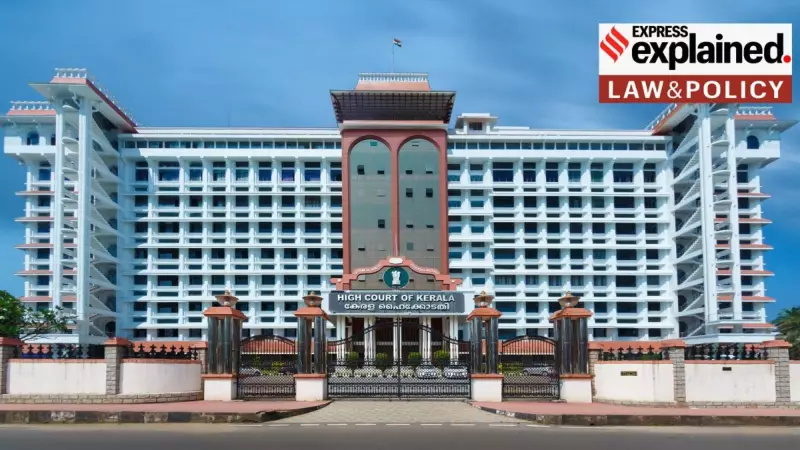
The Kerala High Court has stepped into a high-stakes legal battle that could redefine the boundaries of free speech, copyright law, and platform power in India's digital sphere. The court admitted a writ petition on Wednesday, January 7, 2026, from a prominent rationalist and YouTuber facing the termination of his channel, setting the stage for a crucial examination of the Information Technology (Intermediary Guidelines and Digital Media Ethics Code) Rules, 2021.
The Petitioner and the Impending Channel Ban
Justice Ziyad Rahman A A issued notices to the Union Government and Google India after hearing the plea from Liyakkathali C, the president of the 'Ex-Muslims of Kerala' organisation. Liyakkathali runs the YouTube channel "Liyakkathali CM," which boasts nearly 1.6 lakh subscribers and has accumulated over 5.58 crore views. His content, as described in the petition, focuses on rationalist critique and scientific examination of orthodox religious principles.
The crisis began in late December 2025 after Liyakkathali announced a new project titled "Murtadd" (apostate). Subsequently, his channel was bombarded with multiple copyright complaints from entities including the Wisdom Islamic Organization and preacher M M Akbar. YouTube's policy states that a channel receiving three active copyright strikes within 90 days faces termination. Liyakkathali received eight strikes, with one later withdrawn, prompting the platform to schedule his channel's termination for January 9, 2026.
Fair Use Doctrine vs. Automated Takedowns
At the heart of the dispute is the legal concept of 'fair use.' This doctrine allows limited use of copyrighted material without permission for purposes such as criticism, commentary, news reporting, or research. Liyakkathali argues that the content in question involved short clips or "trailers" from speeches of religious preachers, which he used as a basis for critical analysis and point-by-point rebuttal.
He contends that showing the specific portions being critiqued is essential for effective criticism. The petition asserts that the copyright strikes were "malicious, unjustified and with a view to close down the channel," aimed at silencing his critical commentary rather than protecting genuine copyright interests.
Constitutional Challenge to the IT Rules
This case transcends a simple copyright disagreement. Liyakkathali's petition mounts a direct constitutional challenge against the IT Rules, 2021. After receiving the strikes, he submitted "counter-notifications" to YouTube, explaining his fair use defence. The platform rejected six of these without providing any reasons.
The petition argues that YouTube, classified as a "significant social media intermediary" under the IT Rules due to its massive user base, exercised its powers "arbitrarily" and "without application of mind." By acting as a final arbiter on speech without issuing a reasoned order, the platform is accused of curtailing the fundamental right to free speech under Article 19(1)(a) of the Constitution.
Specifically, the challenge targets Rule 3(1)(b)(iv) of the IT Rules and related provisions of the IT Act, 2000. The petition argues that this delegated legislation grants "unbridled, unguided, arbitrary powers" to private companies to act as censors. It questions whether a private entity should have the power to silence a citizen's speech based on automated systems or opaque policies, especially when the content serves a public function of critique and debate.
Broader Implications for Digital India
This case highlights a significant grey area in Indian digital law. While the IT Rules, 2021 were designed to increase accountability for large tech firms, critics argue they incentivise platforms to over-censor content to avoid legal liability. The petition cites a 2019 High Court judgment affirming that online freedom is part of the fundamental rights guaranteed by Articles 19(1)(a) and 21.
Liyakkathali has asked the court to direct the government to ensure social media censorship aligns strictly with constitutional principles. He also seeks a mandate for intermediaries to forward counter-notifications to copyright claimants instead of adjudicating the validity of the defence themselves.
With the High Court admitting the matter, the proceedings will scrutinise whether the "safe harbour" protections for platforms like YouTube allow them to override the fair use rights of creators. The outcome will also test whether the current IT Rules provide adequate safeguards for digital freedom of expression in India, setting a potential precedent for millions of content creators.