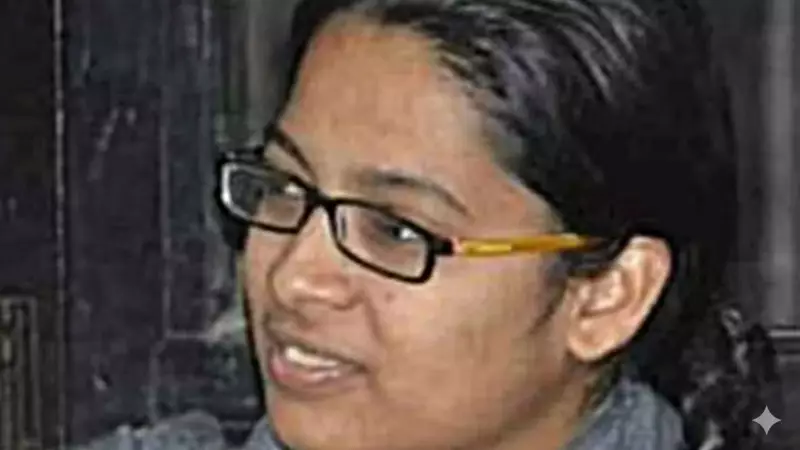
The Koregaon Bhima Commission of Inquiry conducted a site visit to the historic 'Jaystambh' memorial in Perne village, Pune district, on Friday. The visit included activist Harshali Potdar, a key organiser of the Elgaar Parishad, alongside commission members and lawyers representing various parties involved in the probe.
Commission's Mandate and the Site Visit
The two-member commission, headed by retired Calcutta High Court Justice J N Patel and including former chief secretary Sumit Mallick, is investigating the causes behind the violence that erupted in the Koregaon Bhima area on January 1, 2018. The clashes resulted in one death and left several injured.
The decision for the site visit emerged during Potdar's cross-examination before the commission. Special Public Prosecutor Shishir Hiray had posed several questions to Potdar regarding the Jaystambh, to which she frequently replied, "I will check and revert." The commission noted that many queries pertained to the monument, a defence memorial erected by the British government around 1822 to honour soldiers who fought in the Battle of Koregaon Bhima on January 1, 1818.
Observing that it would be appropriate for Potdar to see the memorial firsthand, the commission proposed the visit so she could "get her answers verified and confirmed relating to inscription on the monument/war memorial." Accordingly, the visit took place in the presence of Justice Patel and Sumit Mallick.
Contested Histories and Community Narratives
The Jaystambh stands at the heart of divergent historical interpretations, which are central to understanding the tensions in the region. A prominent Dalit Ambedkarite narrative holds that a British Army contingent of about 500 Mahar soldiers defeated a much larger force of 28,000 Peshwas. For many, this symbolises a victory against caste oppression, and lakhs of Ambedkarites visit the site every January 1, observing it as 'Shaurya Din' (Victory Day). Dr. B.R. Ambedkar himself visited the memorial on January 1, 1927.
However, the family of Kandojibin Gajoji Jamadar, a Maratha soldier wounded in the 1818 battle whom the British appointed as the memorial's in-charge in 1824, presents a different view. Advocate Rohan Jamadar, a descendant, showed the commission historical documents. The family contends that both armies comprised soldiers from various castes and that the battle should not be framed as a caste-based conflict.
Visits to Sensitive Vadhu Budruk Village
Following the Jaystambh inspection, the commission members proceeded to the nearby village of Vadhu Budruk, located about 4 kilometres away, a location considered highly sensitive since the 2018 violence.
Their itinerary included:
- The samadhi of Chhatrapati Sambhaji Maharaj: A site of reverence.
- A memorial of 'Bapuji and Padmavati Shivale': Maratha residents believe their ancestors, the Shivale Deshmukhs, defied Mughal emperor Aurangzeb to perform the last rites of Sambhaji Maharaj in 1689.
- A disputed tomb-like structure: The Dalit Mahar community identifies this as the samadhi of Govind Gopal Dhegoji Meghoji, a 17th-century figure they claim performed the king's last rites. The Gaikwad family claims succession from Govind Gopal.
The erection of a board detailing this "disputed history" of Govind Gopal on the night of December 28-29, 2017, led to an altercation that is seen as a direct trigger for the violence days later. Pune rural police personnel were present during the commission's interactions in the village.
The Elgaar Parishad Link and Ongoing Probe
Activist Harshali Potdar's presence is significant due to her role in the Elgaar Parishad, a conclave held in Pune on December 31, 2017, to mark the 200th anniversary of the Battle of Koregaon Bhima. The Pune police have alleged the event was organised as per the strategy of the banned CPI-Maoist and that speeches there contributed to the next day's violence—a claim organisers deny.
In her affidavit to the commission, Potdar has blamed Hindutva leaders Milind Ekbote and Sambhaji Bhide for the violence. The commission's work continues as it pieces together the complex socio-political and historical factors that culminated in the tragic events of January 1, 2018.