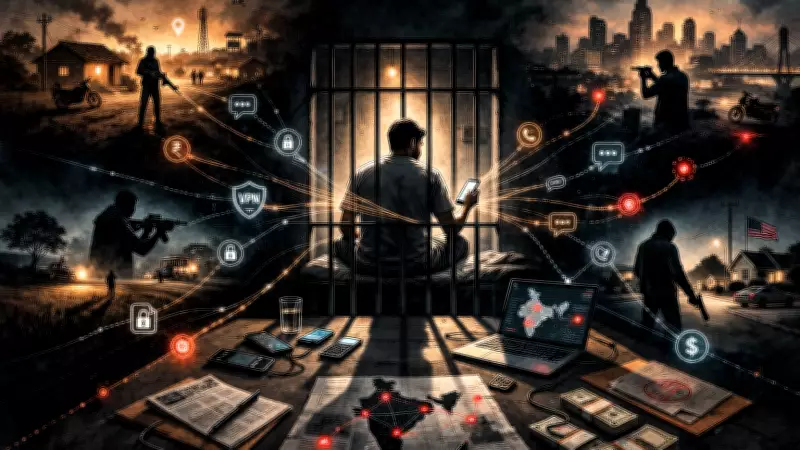
The Lawrence Bishnoi Network: India's New Aggregator-Style Underworld
In the Indian consciousness, the term 'gangster' has long been synonymous with the classic underworld of 1980s and 1990s Mumbai. This era was vividly portrayed through countless Bollywood films, depicting shadowy figures meeting in dingy docks, scrapyards, and smoke-filled bars. The collective menace of that time had a central, infamous face: the gangster-terrorist Dawood Ibrahim.
A Shift in Organized Crime Dynamics
Nearly three decades after that version of the underworld was dismantled, organized crime in India has resurfaced at a scale reminiscent of the 1990s. However, this new iteration represents an entirely different beast. Unlike the hierarchical structures of the past, modern organized crime operates—much like many contemporary businesses that function at scale—in an aggregator mode.
This model is characterized by a decentralized network where the most lethal gang isn't a defined group of 10, 20, or 50 members. Instead, it consists of an amorphous collective of freelancers who undertake specific jobs and collect commissions upon completion. This approach allows for greater flexibility, reduced overhead, and increased difficulty for law enforcement to track and dismantle the network.

The Plug, Play, Prey Methodology
The aggregator underworld, as exemplified by figures like Lawrence Bishnoi, functions on a plug, play, prey methodology. Freelancers are plugged into the network as needed, play their assigned roles in criminal activities, and prey on targets for financial gain. This system enables rapid scaling and adaptation, making it a formidable challenge for authorities.
Key aspects of this model include:
- Decentralized operations with no fixed hierarchy
- Use of digital communication for coordination
- Recruitment of individuals on a job-by-job basis
- Focus on efficiency and profit maximization
This evolution marks a significant departure from the traditional underworld, highlighting how organized crime has modernized to exploit current technological and social landscapes.