Ludhiana Railway Station Grapples with Critical Security Infrastructure Deficit
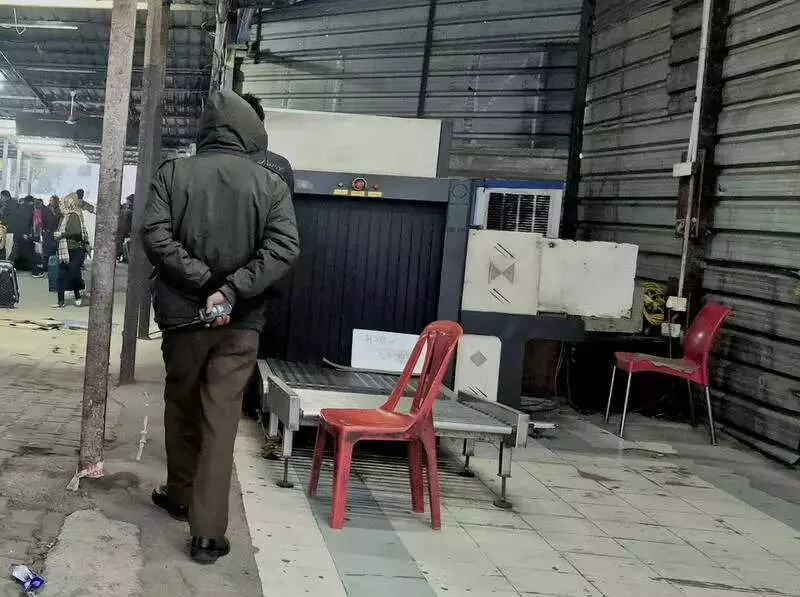
Ludhiana Railway Station is operating with a glaring security vulnerability, as it continues to rely on just one functional luggage scanning machine despite handling an enormous daily footfall of approximately 55,000 passengers, according to official data. This solitary scanner is proving woefully inadequate to manage the heavy rush, particularly during peak travel hours, raising serious concerns about passenger safety and operational efficiency.
Single Machine Operating Beyond Its Capacity Limits
Railway Protection Force (RPF) personnel are tasked with operating the only available scanner, while Government Railway Police (GRP) staff are forced to conduct manual bag checks to handle the overflow during high-traffic periods. On-ground staff have openly admitted that the current volume of passengers far exceeds the machine's designed capacity. To put this into perspective, officials highlight that a standard airport-grade scanner can process about 350 passengers per hour, which translates to roughly 4,200 scans over 12 continuous hours. In stark contrast, Ludhiana Station witnesses over 50,000 travellers daily, a number that completely overwhelms the existing security setup.
An RPF staff member, speaking on condition of anonymity, revealed that around 8,000 bags are scanned during the day shift alone, which extends until evening. Over a full 24-hour cycle, the total number of scanned bags reaches approximately 13,000, indicating that the machine is operating near its maximum load. Despite this, it still falls significantly short of meeting real-time security screening requirements, leaving a substantial gap in coverage.

Frequent Breakdowns Exacerbate Operational Chaos
The already overburdened scanner frequently suffers from breakdowns, adding to the chaos and compounding security risks. For instance, the machine was non-functional on a recent Thursday, with staff reporting that the display was not working properly. It had also previously stopped working on January 15, when a handwritten note stating "machine kharab hai" (machine is faulty) was pasted on it, highlighting the recurrent nature of these failures.
Passengers have expressed deep concern over this precarious situation, arguing that railway stations handling tens of thousands of travellers daily must have security infrastructure that is scaled proportionately to the passenger load. Many have pointed out that a single scanner cannot possibly ensure both smooth passenger movement and thorough security checks simultaneously, creating a bottleneck that compromises safety.
Increased Entry Gates Complicate Screening Efforts
Officials have shared that the station previously had two main entrance doors, which allowed for more systematic scanning procedures. However, since upgrade work began, the number of entry points has increased, making the task of screening passengers effectively much more challenging. The dispersion of entryways has forced both RPF and GRP teams to divide their limited resources across multiple access points, further straining an already fragile security apparatus.
When questioned about the need for additional scanners, RPF in-charge S B Yadav acknowledged that the staff is making every possible effort to manage the situation. He explained that the ongoing station upgrade has created multiple openings into the premises, complicating security protocols. Yadav added that while the teams remain vigilant and committed to their duties, proper and comprehensive security measures will only become feasible once the upgrade project is fully completed, leaving the station vulnerable in the interim.