In a significant ruling that balanced freedom of speech against claims of personality rights, the Madras High Court has declined to issue a gag order sought by a prominent chef and entrepreneur against a costume designer. The court, invoking the ancient wisdom of Tamil poet-saint Thiruvalluvar, emphasized the need for concrete evidence of commercial exploitation before restricting expression.
Court's Verdict and Thiruvalluvar's Wisdom
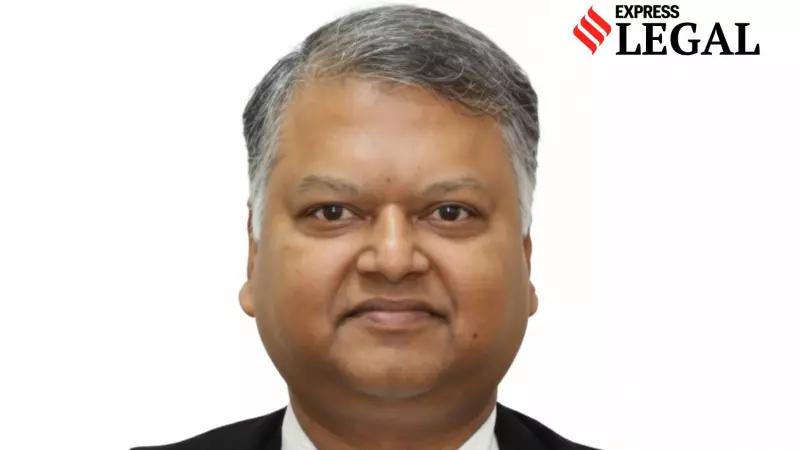
Justice N Senthilkumar, presiding over the case, opened his order on January 7, 2026, with a pointed reference to a classical couplet by Thiruvalluvar. The 2000-year-old verse, the court noted, speaks about moral restraint and the consequences of extra-marital relationships. This set the tone for a judgment that weighed personal conduct against fundamental rights.
The bench refused to grant interim injunctions that would have restrained the woman designer and others from publishing or circulating posts, interviews, photographs, and videos concerning her relationship with the chef. The court was informed that the man was in a relationship with the designer while allegedly being married.
The Legal Reasoning: Free Speech vs. Personality Rights
Central to the court's decision was the primacy of freedom of speech and expression under Article 19(1)(a) of the Constitution. Justice Senthilkumar reiterated that while reasonable restrictions under Article 19(2) are permissible, a blanket order to stifle an individual's right to express views cannot be granted.
The court laid down a crucial test for establishing a violation of personality rights in such cases. It held that merely furnishing links and photographs is insufficient for the court to prima facie conclude that a violation has occurred. The plaintiff must specifically approach the court and establish that the content was used for commercial exploitation of his personality rights.
"In the absence of any specific allegation made with regard to commercial gain to the defendants, the claim made by him seeking an injunction is against the settled principles on the fundamental rights," the bench observed. It added that the application seemed like an attempt to shut the voices of individuals and social media users airing views against him.
Background of the Dispute
The applicant, a well-known figure in the hospitality and entertainment industries, had moved the High Court seeking permanent and interim injunctions. He alleged that the designer's content defamed him and disparaged his personality rights. His suit, filed without pre-litigation mediation under the Commercial Courts Act, claimed the dispute involved commercial exploitation of his reputation and goodwill.
He also sought directions for the removal of specific Instagram posts and restraint orders against unnamed third parties ("John Does") who had allegedly amplified the content across social media, television, and digital platforms.
Arguments from Both Sides
Senior advocate Srinath Sridevan, representing the chef, argued that his client and the designer were only professionally associated. He claimed she misused his trust and began posting content falsely projecting that they were married. This led to a "media trial" causing reputational damage and commercial loss to his catering business, constituting unlawful exploitation of his personality rights.
Countering this, senior advocate S Prabhakaran, for the designer, submitted that the two were in a consensual relationship that culminated in a marriage in December 2023, after the chef allegedly represented himself as divorced. Her disclosures, he argued, were not defamatory inventions but accounts of lived reality, shared after failed attempts to seek accountability. A gag order, he contended, would suppress the truth and misuse defamation law to silence a woman.
Wider Implications and Conclusion
The court's refusal to grant a blanket direction for the removal of videos, photographs, WhatsApp chats, and Instagram posts underscores the judiciary's cautious approach in personality rights cases, especially when they intersect with allegations of personal misconduct. The ruling reinforces that personality rights claims must be backed by clear evidence of commercial harm, not just the existence of unfavorable personal content.
By invoking Thiruvalluvar, the Madras High Court anchored its legal reasoning in enduring cultural ethos, highlighting that personal morality and public discourse are often intertwined in such sensitive disputes. The judgment sets a precedent that the right to free speech will not be lightly curtailed, even for public figures, without a demonstrable case of commercial damage.