

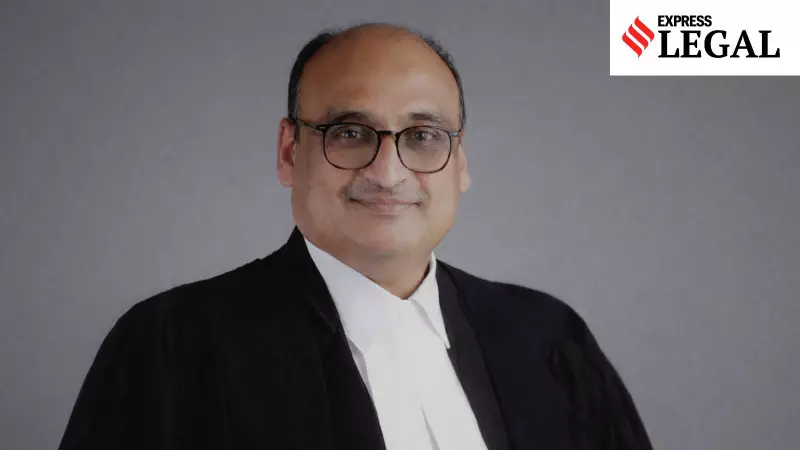
Madras High Court Quashes Police Notice Against Local Journalist
The Madras High Court delivered a significant ruling protecting journalists from arbitrary police actions. Justice Sunder Mohan quashed a notice issued by police to local journalist Vimal Chinnappan. The court stated clearly that police cannot summon or question a petitioner without any case registered against them.
Court's Clear Stance on Police Powers
Justice Mohan examined the police notice during the hearing. He found the notice sought responses to about twelve questions from the journalist. These questions primarily related to an article containing defamatory allegations against police officers.
The court noted the notice referenced a 2023 case. However, investigation in that case had already concluded. A final report had been filed. The police notice did not mention any other active case against the journalist.

"Section 35(1)(b) does not empower police to summon or question the petitioner in absence of any registered case," Justice Mohan declared. "Therefore, this court quashes the notice."
Legal Background of the Case
Vimal Chinnappan filed a plea seeking to quash the police summons. The notice was issued under provisions of the Indian Penal Code and the SC/ST Prevention of Atrocities Act. Police had forwarded questions seeking his explanation about an article published in a journal.
Advocate R Karunanidhi represented the journalist. He argued the notice failed to disclose which case required the petitioner's summons. The 2023 case investigation was complete. No other case existed against Chinnappan.
The 2023 case involved charges under Sections 294(b), 323, and 506(i) of IPC. It also included Sections 3(1)(r), 3(1)(s) and 3(2)(va) of the SC/ST Act. These charges related to allegedly defamatory statements against police.
Understanding Section 35(1)(b)
Section 35(1)(b) outlines when police officers can arrest someone without a warrant. This applies when officers have reasonable complaint, credible information, or suspicion of a cognizable offense. The offense must be punishable by up to seven years imprisonment.
The section requires officers to believe arrest is necessary. This necessity could be for preventing further offenses, ensuring proper investigation, or preventing evidence tampering. However, the court clarified this section does not empower police to summon or question individuals without a registered case.
Justice Mohan emphasized this legal limitation. If police needed the petitioner for enquiry in any other case, they should have referenced that crime number. Since no other case was registered, the notice lacked legal foundation.
Implications for Journalist Protection
This ruling reinforces legal protections for journalists facing police scrutiny. The court's decision establishes clear boundaries for police powers. It prevents arbitrary questioning without proper legal basis.
The judgment comes amid ongoing discussions about press freedom in India. It highlights the judiciary's role in checking potential overreach by law enforcement agencies. Legal experts view this as an important precedent for similar cases.
Journalist organizations have welcomed the decision. They see it as affirming constitutional protections for media professionals. The ruling underscores that police actions must follow established legal procedures.
Justice Mohan's straightforward interpretation of Section 35(1)(b) provides clarity. Police cannot use this provision to bypass requirement of registered cases. The judgment strengthens accountability mechanisms within law enforcement.






