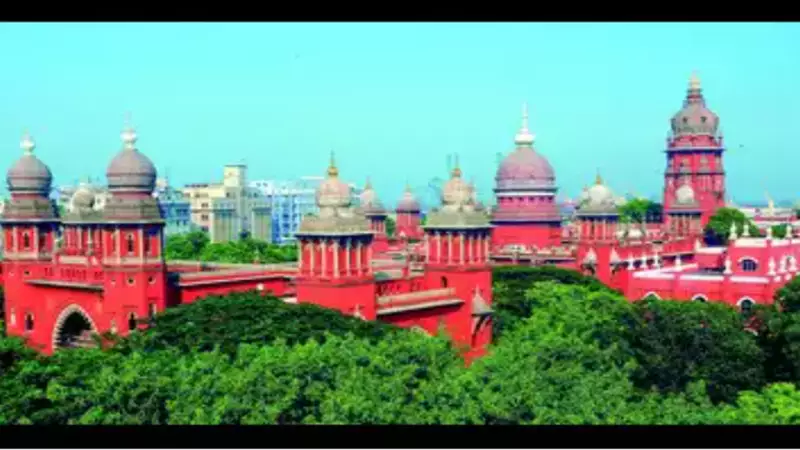
In a significant judgment affirming individual religious freedoms, the Madras High Court has ruled that the government cannot interfere with a person's right to keep idols on their private premises and worship peacefully. The court delivered this ruling while ordering the return of idols removed from a residence in Ennore, Chennai, based on local superstitions.
Court Condemns Superstition Over Unnatural Deaths
The case stemmed from an incident where idols of ‘Sivasakthi Dhakshiswari, Vinayagar and Veerabhadran’ were removed from the house of A Karthik in Ennore. The removal was justified by local authorities and some residents on the ground that several unnatural deaths had occurred in the area after the installation of these idols.
Strongly rejecting this reasoning, Justice D Bharatha Chakravarthy, in his order on Saturday, stated, "God or an idol will never harm any human being, and such beliefs are only superstitions and cannot be said to be in tune with the principles of bhakthi or science." The judge emphasised that state authorities cannot capitulate to such false beliefs.

Rights, Responsibilities, and the Rule of Law
The court underscored that the public cannot take the law into their own hands by the majority might. It directed the authorities to return the removed idols to the petitioner, A Karthik. However, the judgment also outlined clear boundaries for the exercise of this right.
Justice Chakravarthy clarified that any worship by the petitioner must not disturb the local public. The court explicitly prohibited the use of loudspeakers or any activity causing noise pollution. "If such an act is done to disturb the local public, upon receipt of the complaint, the local police are entitled to act," the judge said.
Furthermore, the court noted that the authorities were at liberty to take action if any construction for the idols was made without necessary permission from the local body. It also added that if a ‘Hundi’ (offering box) is kept, it would empower the Hindu Religious and Charitable Endowments (HR and CE) Department to inspect and take appropriate legal action.
A Precedent for Personal Religious Expression
This ruling sets a clear legal precedent, reinforcing the constitutional protection of an individual's right to practice religion within the confines of their home. It draws a firm line against mob mentality and superstition influencing state action. The judgment balances this fundamental right with civic responsibility, ensuring that personal worship does not infringe upon the peace and lawful order of the community.
The Madras High Court's decision is seen as a robust defence of personal liberty against unfounded fears and majoritarian pressure, reaffirming that the right to peaceful worship is a protected personal freedom under the law.