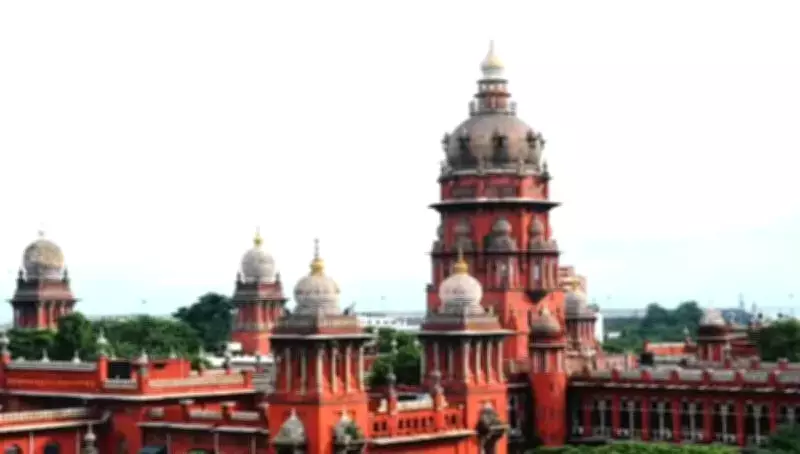
Madras High Court Deluged by Repetitive Election PILs, Many Dismissed as Publicity Stunts
In Chennai, a predictable pattern emerges at the Madras High Court with the announcement of parliamentary, assembly, or local body elections. This election season is no exception, as the court is once again inundated by a wave of public interest litigations (PILs) filed by a familiar group of petitioners. These petitions often bear strikingly similar and repetitive reliefs, raising questions about their genuine public interest value.
Familiar Petitions with Little New Ground
Far from securing meaningful public remedies, a significant portion of these PILs end up being dismissed or withdrawn by the court. The reliefs sought are largely unchanged from previous election cycles. They typically include demands to halt the distribution of cash and gifts to voters, protect electronic voting machines (EVMs) from tampering, install CCTV cameras at all polling booths and strong rooms, enforce the Model Code of Conduct (MCC), and make voting compulsory for all eligible citizens.
This season, however, petitioners have notably omitted one common request: the purification of voters' lists. This is in view of the Summary Revision (SIR) process conducted by the Election Commission of India (ECI) well before the election announcements, which may have addressed some concerns proactively.

Recent Dismissals Highlight the Trend
On April 7 alone, the first bench led by Chief Justice Sushrut Arvind Dharmadhikari declined to entertain four such PILs. One petitioner, T Prabhakaran, sought the court's intervention to direct the organizers of the Indian Premier League (IPL) to either postpone or shift the venue of two matches scheduled at the MA Chidambaram Stadium in Chennai.
Another PIL, filed by advocate M L Ravi, requested the High Court to direct the ECI to prevent the misuse of reserved election symbols allotted to recognized political parties. Ravi alleged that candidates affiliated with other parties are being permitted to contest on symbols reserved for major recognized parties. Notably, in 2019, the same petitioner had approached the court seeking to declare the elections of four Tamil Nadu Lok Sabha members null and void, citing their use of symbols allotted to other political parties.
Patterns of Repetition and Publicity Litigation
A PIL demanding strict implementation of the Model Code of Conduct and prevention of cash and gift distribution is a perennial feature during all election seasons. Interestingly, petitions focusing on EVMs are conspicuously absent this time around. On April 1, a plea by Madurai-based petitioner K K Ramesh—a repeat filer seeking to prevent distribution of cash and gifts—was dismissed by the court, which labeled it as 'publicity litigation.'
This trend underscores a broader issue: while PILs are intended to serve the public good, many filed during election periods appear to lack substantive new arguments or evidence, instead recycling old grievances. The Madras High Court's response reflects a growing impatience with such practices, emphasizing the need for genuine, well-founded public interest interventions rather than repetitive or frivolous claims.