Madras High Court Expresses Strong Displeasure Over Temple Dance Performances
The Madras High Court has delivered a sharp rebuke to state officials. The court criticized their apparent reluctance to curb what it described as obscene dance performances. These performances occurred during the Dasara festival at the Arulmigu Mutharamman Thirukovil temple in Kulasekarapattinam, Tamil Nadu.
Court Finds Actions 'Not Appreciable'
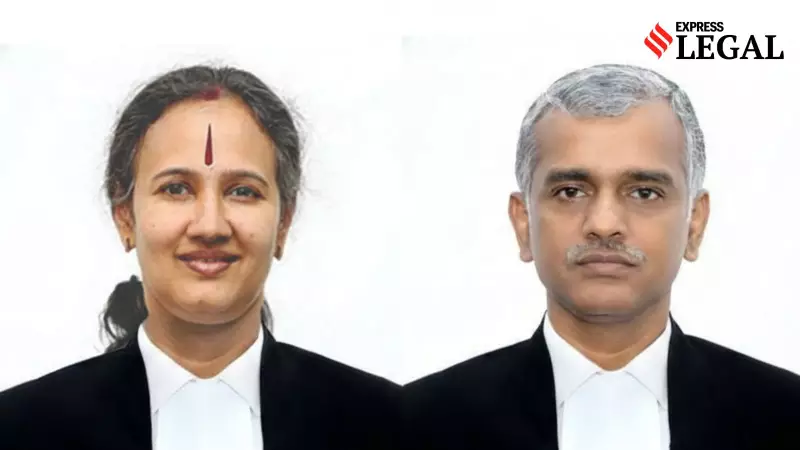
A division bench comprising Justices Anita Sumanth and C Kumarappan heard a Public Interest Litigation (PIL). The PIL alleged a failure by authorities to implement previous court orders. These orders specifically aimed to stop vulgar dance and music programs during the Navaratri festival celebrations.
The bench made its position very clear. It stated that after reviewing evidence, including a pen-drive and photographs submitted by the petitioner, it formed a prima facie view. The view was that the respondents showed great reluctance in implementing the court's earlier directives. The court explicitly labeled this conduct as "not appreciable."

Dances Clash with Festival Spirit and Court Orders
The court emphasized two key points of contention. First, it stated that such dance programs do not align with the spiritual nature of the Dasara festival. Second, the performances directly contradicted previous orders issued by the court in 2017 and 2022.
The division bench has now issued fresh directions. It has ordered the authorities to restrain any obscene and vulgar dances. Furthermore, it directed them to take appropriate action against any violators.
Official Report Fails to Satisfy the Court
Following initial court orders, the executive officer filed a report in November 2025. This report did not dispute the occurrence of such dances, as captured in the petitioner's evidence. However, it claimed the objectionable dances were not performed within the actual temple premises.
The court found this report unsatisfactory. It noted that the executive officer's account ran counter to a separate monitoring committee report from October 2025. The court made it clear that no separate petition is needed to execute its earlier orders. It also stated the petitioner is free to take further action to seek redressal.
Background of the Legal Dispute
The PIL was originally filed seeking a writ of mandamus. The goal was to compel district and police authorities to implement previous court directives. These directives, along with circular memoranda from 2017, 2018, 2022, and 2023, prohibited vulgarity and obscenity in the name of art during the festival.
In September 2025, the court heard the PIL and directed the immediate formation of a monitoring committee. This committee was tasked with overseeing the 2025 celebrations and ensuring all cultural programs were videographed.
A report filed in November 2025 by the government pleader, signed by committee members, claimed no violations of the festival's decorum or spiritual ethos occurred. However, the petitioner contested this at the next hearing on November 11, 2025. He argued that despite various court directions, temple authorities and police took no steps to stop inappropriate dance programs. To support his claim, he submitted additional papers and a pen-drive containing video recordings of the dances in question.
The court's latest remarks underscore its ongoing scrutiny of the situation and its demand for compliance with its orders to preserve the sanctity of the religious festival.