
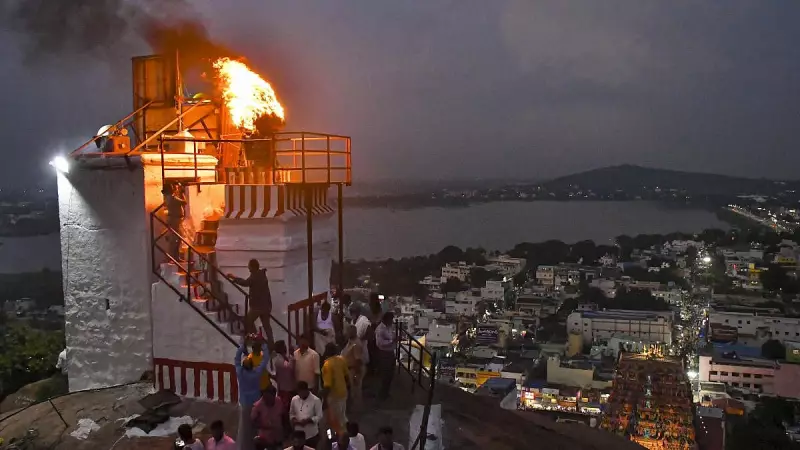
The Madras High Court has delivered a significant verdict, upholding a single judge's ruling that permitted the lighting of a traditional lamp, or 'Deepam', on an event referred to as 'Deepathoon'. In a strongly worded observation, the court dismissed the state administration's apprehension of potential law and order problems as an 'imaginary ghost' created for convenience.
Court Slams State's 'Imaginary Ghost' Argument
The bench, while confirming the earlier judgment, was critical of the state authorities' stance. The court stated that the apprehension of a law and order breakdown was a fabricated concern. It suggested this phantom threat was invoked to conveniently place one community under suspicion against another, without substantial grounds. This observation strikes at the heart of the state's rationale for opposing the event.
The original ruling was delivered by a single judge of the Madras High Court. The detailed order, passed on 06 January 2026, allowed for the ceremonial lighting of the lamp. The state authorities had challenged this decision, leading to the appeal before the division bench. The higher bench's confirmation solidifies the legal permission for the act.
Details of the 'Deepathoon' Event and Legal Challenge
While the exact nature of 'Deepathoon' was not elaborated in the brief report, the core legal conflict revolved around the state's attempt to prevent the lamp-lighting ceremony. The authorities had cited potential communal tension and disruption of public peace as primary reasons. The High Court, both at the single judge and division bench levels, found this justification lacking in merit and evidence.
The court's ruling implies a check on administrative overreach, especially in matters with religious or cultural connotations. By terming the law and order threat an 'imaginary ghost', the judiciary has emphasized the need for concrete evidence over hypothetical scenarios when restricting such expressions.
Implications for Administrative Action and Community Relations
This judgment carries important implications for how the state handles perceived sensitive events. Key takeaways from the verdict include:
- Burden of Proof: The state must provide tangible proof of a threat, not merely speculative fears, to justify bans.
- Community Relations: The court warned against actions that artificially pit communities against each other based on suspicion.
- Judicial Oversight: The judiciary will actively scrutinize claims of law and order threats to prevent their misuse.
The case, stemming from Madurai in Tamil Nadu, concludes with a clear message for the state machinery. The Madras High Court's firm stance upholds the principle that administrative convenience cannot override legal rights through the creation of unfounded fears. The ruling reinforces the role of the courts in protecting cultural practices from arbitrary state intervention.