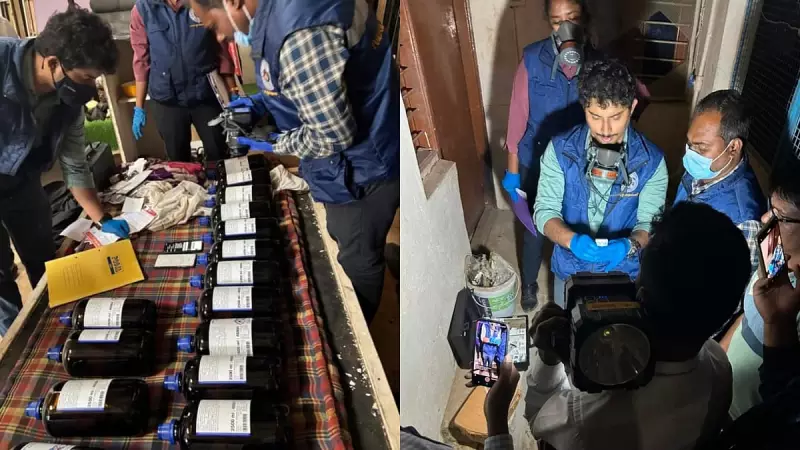
In a major operation that has raised eyebrows across state lines, the Maharashtra Anti-Narcotics Task Force (ANTF) has successfully busted three clandestine drug manufacturing units operating within the limits of Bengaluru. The raids, which concluded recently, have brought to light significant lapses in the local intelligence and surveillance mechanisms of the city's police force.
The Raid and Its Implications
The fact that such large-scale, organized drug production facilities were functioning in a major metropolitan city like Bengaluru without detection for a considerable period points to a critical failure in routine monitoring. The units were allegedly involved in the synthesis and distribution of narcotic substances, posing a severe threat to public health and safety. The operation was led by the Maharashtra ANTF, highlighting the role of inter-agency cooperation, but simultaneously casting a shadow on the efficacy of the local police's own intelligence-gathering networks.
Exposing Systemic Surveillance Gaps
This incident has starkly highlighted multiple gaps in the system. First, the failure of local intelligence gathering allowed these factories to operate under the radar. Second, there appears to have been a lack of routine surveillance of suspicious commercial establishments that could have flagged unusual activities. Finally, the episode underscores the need for more robust and seamless inter-state coordination between the police forces of Karnataka and Maharashtra to combat such cross-border criminal enterprises effectively.

The successful bust by the Maharashtra team, while commendable, raises an uncomfortable question: how did these units evade the notice of the Bengaluru police's own surveillance apparatus? The incident suggests that criminals are exploiting jurisdictional complexities and intelligence silos between states.
Official Response and Future Concerns
The operation was officially reported on 28 December 2025. While the names of specific officers involved in the bust are part of the record, the development has been widely attributed to the efforts of the ANTF. The revelation is expected to trigger a serious review of protocols within the Bengaluru City Police regarding the monitoring of industrial and commercial units that could be repurposed for illegal activities.
Experts argue that this is not an isolated issue but a symptom of a larger challenge in urban policing. As drug networks become more sophisticated and decentralized, law enforcement agencies must enhance their technical surveillance capabilities and foster a culture of proactive, rather than reactive, investigation. The Bengaluru drug factory bust serves as a wake-up call for police forces across major Indian cities to tighten their vigilance and improve coordination to dismantle such networks at their source.