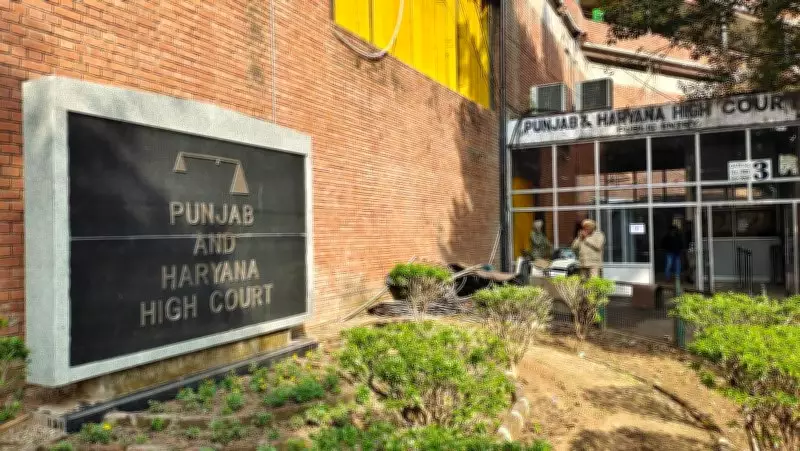
The Punjab and Haryana High Court has delivered a significant judgment, stating that a maternal grandmother is entitled to seek maintenance for her grandchild under the Hindu Adoption and Maintenance Act, 1956, even when the child's mother is alive. The ruling came in response to a petition filed by a grandmother who was denied maintenance by a lower court on the grounds that the mother was capable of filing the claim.
Background of the Case
The case involved a woman who had been taking care of her grandchild since the child's mother, her daughter, was unable to provide for the child due to personal circumstances. The grandmother approached the court seeking maintenance from the child's father, who had allegedly abandoned the child. The father contested the claim, arguing that the grandmother lacked the legal standing to seek maintenance since the mother was still alive and could file the petition herself.
Lower Court's Decision
The family court had earlier dismissed the grandmother's petition, holding that under Section 20 of the Hindu Adoption and Maintenance Act, only the mother, father, or legal guardian of the child could claim maintenance. The court opined that the grandmother did not fall within this category, especially when the mother was alive and could exercise her rights.

High Court's Ruling
Justice Arun Palli of the Punjab and Haryana High Court overturned the lower court's decision, interpreting Section 20 of the Act expansively. The court observed that the term 'legal guardian' includes a grandmother who has been acting as the de facto guardian of the child. The judgment emphasized that the welfare of the child is of paramount importance and that the law should not be interpreted in a manner that denies maintenance to a child in need.
Key Observations
- Welfare of the Child: The court stressed that the primary consideration in maintenance cases is the well-being of the child. Denying the grandmother's claim would have left the child without financial support, which would be detrimental to the child's interests.
- Expansive Interpretation: The court held that the term 'legal guardian' should be interpreted broadly to include any person who has undertaken the care and custody of the child, including a grandmother. This interpretation aligns with the protective intent of the Act.
- No Bar in Law: The court found no legal provision that prohibits a grandmother from claiming maintenance solely because the mother is alive. The mother's existence does not extinguish the grandmother's right to seek maintenance for the child she is caring for.
Implications of the Judgment
This ruling sets a precedent for similar cases where grandparents are raising their grandchildren due to the parents' inability or unwillingness to provide care. It recognizes the role of grandparents as caregivers and ensures that children are not deprived of maintenance due to technical legal hurdles. The judgment also reinforces the principle that the law must adapt to protect the best interests of the child, especially in complex family dynamics.
Reactions
Legal experts have welcomed the decision, noting that it provides clarity on the rights of grandparents under the Hindu Adoption and Maintenance Act. The judgment is expected to benefit many grandparents who are often left to fend for their grandchildren without legal recourse. Child rights activists have also praised the court for prioritizing child welfare over procedural technicalities.
Conclusion
The Punjab and Haryana High Court's ruling is a landmark decision that expands the scope of persons entitled to claim maintenance for a child. By allowing the maternal grandmother to seek maintenance, the court has ensured that the child's right to financial support is not compromised. This judgment serves as a reminder that the law must evolve to meet the changing social realities and the needs of vulnerable children.