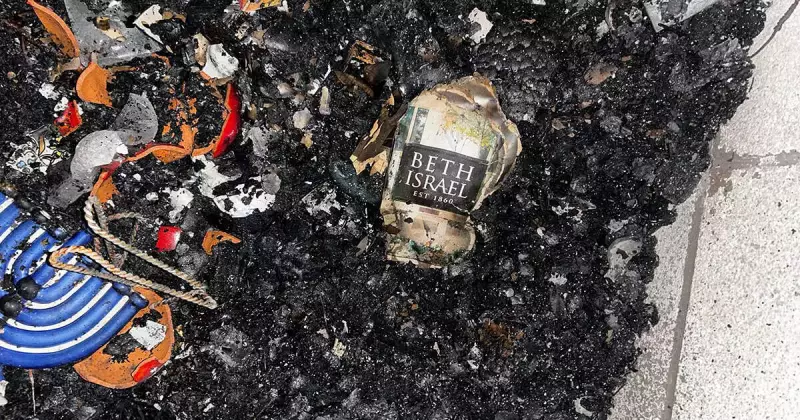
Mississippi Teen Faces Federal Arson Charges for Synagogue Fire
Stephen Spencer Pittman, a 19-year-old from Madison, Mississippi, now stands at the center of a serious federal arson case. Authorities allege he deliberately set fire to Beth Israel Congregation in Jackson. This synagogue holds a significant place as the state's largest and the only one located in the capital city.
Attack Motivated by Antisemitism, Say Investigators
Federal investigators state the attack was driven by antisemitism. They cite the synagogue's clear Jewish identity and specific statements attributed to Pittman as evidence of this motivation. The fire caused extensive internal damage to the building. Sacred items were lost in the blaze, adding to the congregation's distress.
This incident has heightened concerns about a dangerous trend. Experts worry about how extremist ideas can migrate from online forums and social media platforms into acts of real-world violence.

From College Student to Federal Defendant
Before his arrest, Pittman was known as a college student with a background in baseball. His life appeared to follow a typical routine focused on sports, fitness, and daily responsibilities. There were no widely known public signs or warnings suggesting he would become involved in a major federal case targeting a house of worship.
Historic Synagogue Targeted Again
Beth Israel Congregation has deep historical roots within Mississippi. It has faced previous attacks, including during the civil rights era when it was targeted by the Ku Klux Klan. The recent fire left the synagogue severely damaged. The congregation must now make temporary arrangements for worship and community gatherings as the long process of recovery begins. Fortunately, no injuries were reported from the incident.
Evidence Points to a Deliberate Act
Federal authorities allege the fire was a premeditated act. Their case is supported by surveillance footage and physical evidence collected at the scene. Investigators describe a masked individual entering the synagogue, pouring gasoline inside, and then igniting the flammable liquid.
Authorities also report that Pittman was arrested shortly after he sought hospital treatment for burn injuries. This medical visit played a crucial role in his identification and apprehension.
Disturbing Statements and a Father's Report
One of the most alarming details involves language attributed to Pittman. Investigators claim he referred to the synagogue as "the synagogue of Satan" and stated he targeted it specifically because of its Jewish connections. Authorities view such language as highly relevant. It strongly indicates an ideological motivation tied directly to a religious target.
The case took a decisive turn when Pittman's own father reported him to authorities. The father acted after receiving disturbing communications from his son and noticing the burn injuries. This report became a key piece of the investigation, helping officials quickly identify and detain the suspect.
Potential Penalties and Broader Implications
Pittman now faces federal charges. If convicted, he could receive a significant prison sentence under strict federal arson laws. The case has attracted intense public and media attention. This is due to its nature as an attack on a religious institution, which authorities are treating as a potentially hate-motivated crime.
Online Hate and Radicalization Patterns
While investigators have not publicly detailed Pittman's specific online activity, the case has renewed serious concerns. There is growing worry about how antisemitic content spreads across digital platforms and influences individuals.
Researchers and analysts who study online radicalization often point to common, dangerous patterns. These patterns can include:

- Algorithm-driven escalation that pushes users toward increasingly extreme content.
- Conspiracy narratives framed as hidden "truths" that users are encouraged to uncover.
- The use of memes and coded language that slowly normalizes the dehumanization of specific groups.
- Echo chambers that effectively shut out any opposing or moderating viewpoints.
- Online communities that actively reward expressions of outrage and encourage members to escalate their actions.
This type of harmful influence typically builds in a person's mind through gradual repetition and social reinforcement. It is rarely the result of a single, viral moment online.