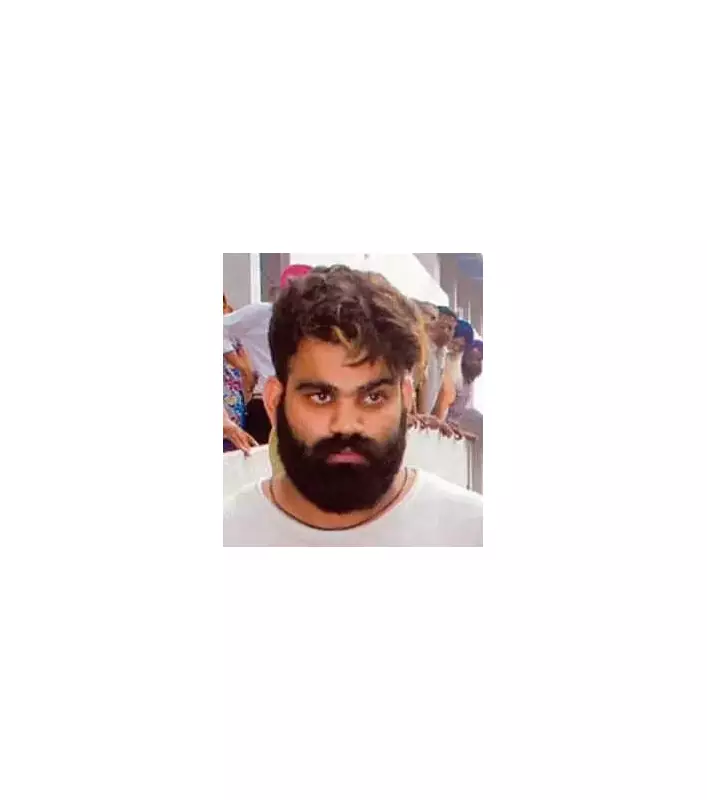
A local court in Mohali has discharged the notorious gangster Jagdeep Singh, widely known as Jaggu Bhagwanpuria, from charges under the stringent Unlawful Activities (Prevention) Act (UAPA). This decision came after the prosecution openly conceded that they lacked any admissible evidence against him. The only material they had was his alleged confession made to the police.
Charges and Legal Hurdles
Punjab police initially booked Jaggu Bhagwanpuria under Sections 17, 18, and 20 of the UAPA. These sections deal with raising funds for terrorist acts, conspiracy, and membership in a terrorist organization. However, as the investigation progressed, authorities failed to gather any substantive or corroborative material. They could not link him directly to the alleged unlawful or anti-national activities.
Prosecution's Admission in Court
During the hearing, the prosecution placed on record a critical admission. They stated that the sole evidence against Jagdeep Singh was his confession recorded by the police. The court quickly observed that such a confession holds no legal weight. It is inadmissible under Section 25 of the Indian Evidence Act. This section explicitly bars the use of confessions made to police officers as evidence in court.
Court's Detailed Order and Reasoning
In its detailed order, the court relied heavily on findings from the competent authority. The authority categorically stated, "As regards accused Jagdeep Singh alias Jaggu Bhagwanpuria, resident of village Bhagwanpur, district Gurdaspur, there is no other evidence except his confession before the police. This confession is hit by Section 25 of the Indian Evidence Act, not being admissible in the eyes of law. Consequently, there is no prima facie admissible evidence, at this stage, against Jagdeep Singh alias Jaggu Bhagwanpuria connecting him with the commission of the occurrence. Hence, he is discharged of the allegations."
Missing Sanction and Fatal Flaws
The court further noted another significant flaw in the prosecution's case. The mandatory sanction required to prosecute Jagdeep Singh under the UAPA was not granted by the competent authority. This sanction is a strict prerequisite for proceeding against any accused under this tough anti-terror law. Despite the challan being presented against four accused in the case, the absence of this sanction and the lack of admissible evidence proved fatal. It completely undermined the case against Jaggu Bhagwanpuria.
Origins of the Case and Arrests
The case originated from secret information received by the complainant. This information alleged that Jagdeep Singh alias Jaggu Bhagwanpuria, Jaspal Singh alias Honey, Yuvraj Singh alias Cheena, and Nishan Singh, along with others, were involved in unlawful and anti-national activities. They were reportedly targeting certain Hindu leaders. Acting on this tip, the police arrested accused Yuvraj Singh and Nishan Singh. From their possession, authorities recovered a 0.32 bore pistol, four live cartridges, and a motorcycle.
During further investigation, which included scrutiny of mobile phone data, accused Jaspal Singh alias Honey was also arrested. Jagdeep Singh alias Jaggu Bhagwanpuria was subsequently brought into the case on production warrants. However, the investigation failed to yield any independent evidence linking him to the alleged recoveries, conspiracy, or unlawful activities.
Court Proceedings and Future Dates
During the court proceedings, accused Yuvraj Singh alias Chinna and Jaspal Singh alias Honey were produced by jail authorities. Jagdeep Singh alias Jaggu Bhagwanpuria and Nishan Singh were produced through video conferencing. The court has directed that all accused be produced again on January 28, 2026. This ensures the legal process continues for the remaining individuals involved in this complex case.