

MP High Court Sounds Alarm on DJ Noise Pollution as Major Health Threat
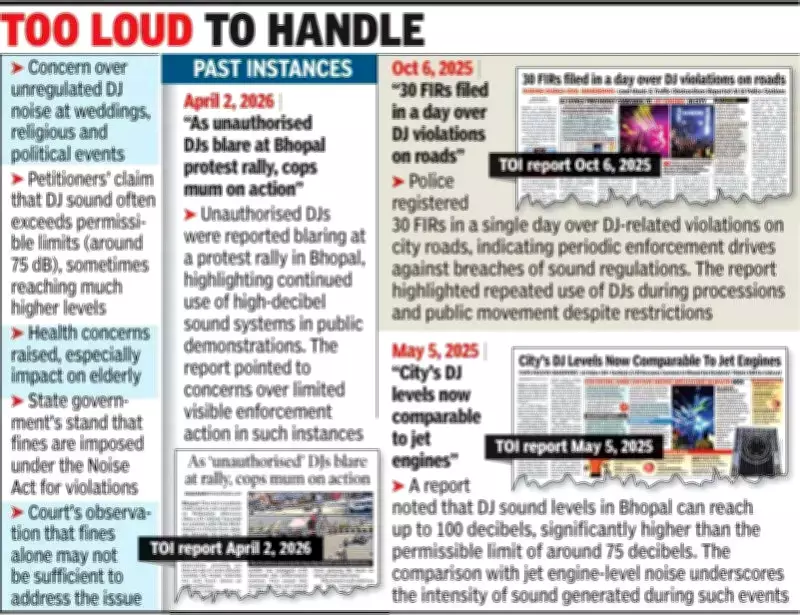
The Madhya Pradesh High Court has issued a stark warning regarding the unregulated use of DJ systems at public, religious, and political events, emphasizing that this practice poses serious health concerns. The court observed that merely imposing fines is an inadequate solution to curb this growing problem, which requires more comprehensive regulatory measures and public awareness campaigns.
PIL Highlights Grave Health Risks from Excessive DJ Sound Levels
A public interest litigation (PIL) filed by a group of elderly citizens, including retired IAS officer R P Shrivastava and former vice-chancellor of Nana Deshmukh Veterinary University, Govind Mishra, brought this critical issue to the forefront. The petitioners argued that DJs played during events such as marriages and religious processions operate without any effective regulation on sound output.
The petition detailed alarming health impacts: Sound levels beyond 75 decibels are hazardous to human health, yet DJs frequently produce noise reaching up to 100 decibels. This excessive noise has been linked to increased blood pressure, particularly affecting vulnerable groups like the elderly and children. Shockingly, there have been reported incidents of heart attacks attributed to the blaring sound of DJs, underscoring the urgent need for intervention.

Government Response and Legal Arguments
In its reply to the petition, the state government stated that fines are imposed under the provisions of the Noise Act for playing DJs beyond permissible sound limits. However, this response was met with skepticism from the court and petitioners alike.
Senior advocate Aditya Sanghi, representing the petitioners, contended that the unregulated use of DJs is evolving into a major public health hazard. He referenced the Supreme Court's stance, which has also identified increasing noise pollution as a significant problem adversely affecting the life and health of citizens.
Court's Directive and Future Hearing
The bench, comprising Chief Justice Sanjeev Sachdeva and Justice Vinay Saraf, heard the petition and made a pivotal observation. They noted that merely imposing fines may not serve as an effective remedy to the problem. Instead, the court emphasized the necessity of creating public awareness to promote regulated use of DJs.
The hearing on the petition has been deferred to June 23, 2026, allowing time for further deliberation and potential development of more robust regulatory frameworks. This decision highlights the court's recognition of the need for a multi-faceted approach, combining legal enforcement with educational initiatives to address the health risks posed by noise pollution from DJs.






