Mumbai Court Denies Police Request for Drug Retesting
A special court in Mumbai delivered a significant ruling last week, rejecting a police application to retest suspected narcotics. The court emphasized that unfavorable forensic results alone cannot justify retesting under the Narcotic Drugs and Psychotropic Substances Act.
The Case Details and Police Application
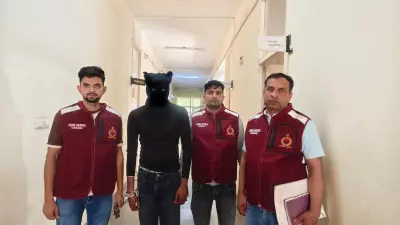
In July 2025, the Mumbai Police conducted a major raid through their Anti Narcotics Cell Azad Maidan unit. Officers seized over 1,11,400 tablets labeled TROHMA 100 SR from a Goregaon resident. The police estimated the value of these suspected addictive opioids at approximately Rs 2.22 crore.
Following standard procedure, investigators drew samples from the seized tablets and sent them to the state forensic science laboratory in Kalina. The laboratory report, received on December 30, revealed that all tested samples showed negative results for narcotics.

Earlier this month, the Anti Narcotics Cell filed an application before Special Judge A M Bhandarwar. The police sought permission to send three additional reserved samples to the forensic science laboratory in Hyderabad for retesting.
Court's Reasoning and Legal Interpretation
In his order dated January 13, Special Judge Bhandarwar provided clear legal reasoning for rejecting the police plea. The court noted that both the NDPS Act and established judicial interpretations specify that retesting is permitted only under "exceptional circumstances."
The court observed that the police application cited only one reason for seeking retesting: the negative forensic report. The prosecution failed to identify any exceptional circumstances that would compel retesting or re-analysis of the samples.
Judge Bhandarwar pointed out that the Kalina FSL report contained no indication of laboratory inability to analyze the samples due to equipment limitations. The laboratory also did not suggest resending samples to the central forensic facility.
"Since the report was not favourable to the prosecution, it was its responsibility to provide exceptional grounds for retesting," the court stated in its order.
Defense Arguments and Previous Precedents
Defense lawyer Pranay Saraf, representing some of the accused individuals, strongly opposed the police application. Saraf argued that the prosecution typically relies on reports from the same Kalina forensic laboratory in drug cases.
The defense lawyer noted that previous convictions in drug cases had been secured using forensic reports from this very laboratory. He maintained there existed no legitimate grounds for seeking a retest in this particular case.
The court agreed with this perspective, stating that unfavorable results alone cannot justify sending samples for retesting. The bench added that in all other instances, the prosecution consistently relies on reports submitted by the Kalina FSL.
Broader Implications and Case Background
This ruling establishes important legal boundaries for drug investigations in Mumbai. The court's interpretation clarifies that police cannot routinely seek retesting simply because initial forensic results do not support their case.
The case involves allegations against nine individuals accused of involvement in procuring and supplying narcotics. Police made arrests following their July raid, but the negative forensic results have complicated the prosecution's position.
Legal experts suggest this decision reinforces the principle that forensic science must remain objective rather than serving investigative convenience. The ruling emphasizes that exceptional circumstances require genuine, substantiated justification beyond mere dissatisfaction with results.
This development represents a setback for the Anti Narcotics Cell, which must now proceed with its case based on existing forensic evidence. The decision underscores the judiciary's role in maintaining procedural integrity within India's drug enforcement framework.