Facial Recognition Technology Leads to Swift Arrest in Mumbai Train Murder Case
In a remarkable display of technological integration in law enforcement, Government Railway Police (GRP) in Mumbai successfully apprehended a murder suspect within just 24 hours of the crime, thanks to advanced facial recognition cameras installed across the railway network. The rapid investigation highlights how surveillance technology is transforming criminal detection in India's financial capital.
Tragic Incident on Local Train
The case involves the brutal stabbing of 33-year-old Alok Kumar Singh, a junior college teacher who was attacked during a commute home. According to police reports, the incident occurred on Saturday evening at Malad station when Singh and his colleague S K Trivedi were traveling in a Borivli-bound slow local train. A heated argument over alighting at the station escalated violently, resulting in Singh being stabbed at the door of the coach.
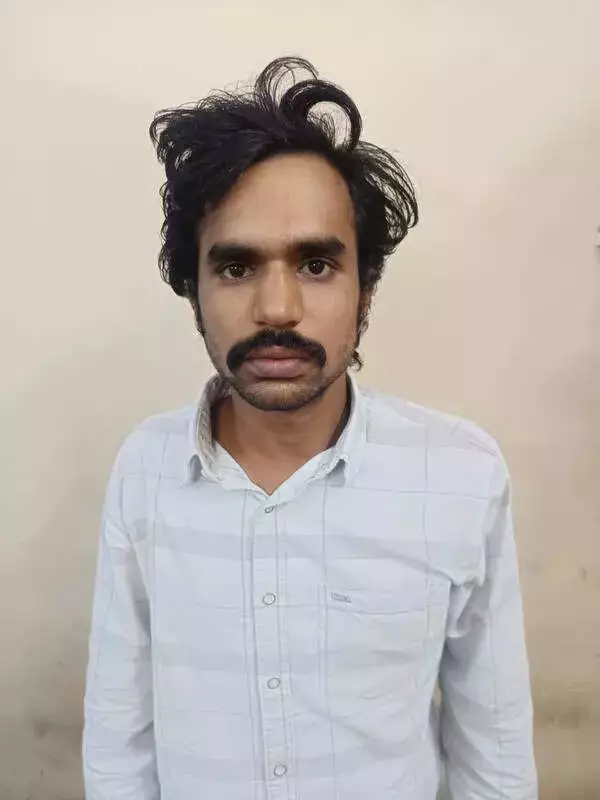
The suspect, identified as 27-year-old Omkar Shinde, allegedly used a small pair of tongs to carry out the attack before discarding the weapon while fleeing the scene. Police teams are currently searching for the murder weapon as part of their ongoing investigation.
Massive Surveillance Operation
What makes this case particularly noteworthy is the extensive use of facial recognition technology in the investigation. A Borivli GRP officer revealed that investigators scanned footage from approximately 200 cameras throughout the night following the murder. The coordinated effort involved multiple agencies including the Railway Protection Force and Mumbai city police working alongside GRP personnel.
"We wanted to check if the suspect was a frequent railway commuter and started looking through surveillance footage from five days before the incident," explained a GRP officer involved in the operation. Investigators formed 5-6 specialized teams that meticulously maintained logs documenting dates and timings when Shinde was captured entering or exiting railway premises.
Tracking the Suspect's Movements
Police reconstructed Shinde's movements through detailed analysis of surveillance footage. After the stabbing, cameras captured him running on platform number 1, climbing a foot overbridge, and exiting the railway premises toward Malad (East) within a minute of the attack.
Further investigation revealed Shinde's daily commuting patterns. He would typically board the 7:18 AM Up local from Malad and return home on the 4:16 PM local from Charni Road after work. Interestingly, surveillance footage showed that while Shinde preferred walking home in the evenings, he regularly took an auto-rickshaw to reach the station in the mornings.
Strategic Apprehension
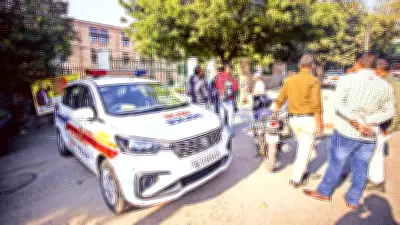
Armed with this behavioral intelligence, investigators set up a strategic trap at the auto-stand outside Malad station around 7 AM on Sunday. "We were not too sure if he would go to work as it was a Sunday. But we saw him getting off an auto," recounted an officer involved in the operation. The team immediately apprehended Shinde and brought him to the Borivli GRP chowky for questioning.
Initially, Shinde claimed he was unaware of Singh's death, but the comprehensive evidence gathered through surveillance proved crucial in the investigation. The 27-year-old suspect resides at Kurar village in Malad with his parents and brother, working primarily at his father's metal polishing unit in Khetwadi, south Mumbai, while also engaging in imitation jewelry work independently.
Legal Proceedings and Investigation Team
On Sunday, Shinde was produced before a holiday court at Borivli which remanded him to police custody until January 29. Police officials confirmed that the suspect has no prior criminal record, adding complexity to understanding the motive behind this violent act. Investigators noted that Shinde's father suffers from a heart condition and has stopped working.
The successful operation was led by DCP Sunita Thakre and ACP Kishore Shinde, under the supervision of railways commissioner of police M Rakesh Kalasagar. The core investigation team included senior inspector Dattatreya Khuperkar and sub-inspector Prakash Salunke, whose coordinated efforts across multiple agencies resulted in the swift apprehension.
This case represents a significant milestone in Mumbai's law enforcement capabilities, demonstrating how integrated surveillance systems and facial recognition technology can dramatically reduce investigation timelines for serious crimes. As the city continues to expand its technological infrastructure, such successes highlight the potential for advanced security systems to enhance public safety across India's urban centers.